What Are the Top 5 Types of Automotive Micro switches Used in New Energy Vehicles?
In a new energy vehicle (NEV), there is a frequent need to detect whether specific components are in their correct positions—such as whether vehicle doors are fully latched, the hood is locked, the charging port cover is completely closed, the charging gun is securely locked, the tailgate is properly pulled shut, the brake pedal is depressed, or seat-belts are correctly fastened. Behind each of these checks, an automotive micro switch translates mechanical displacement into an electrical signal, which is then sent to a control module.
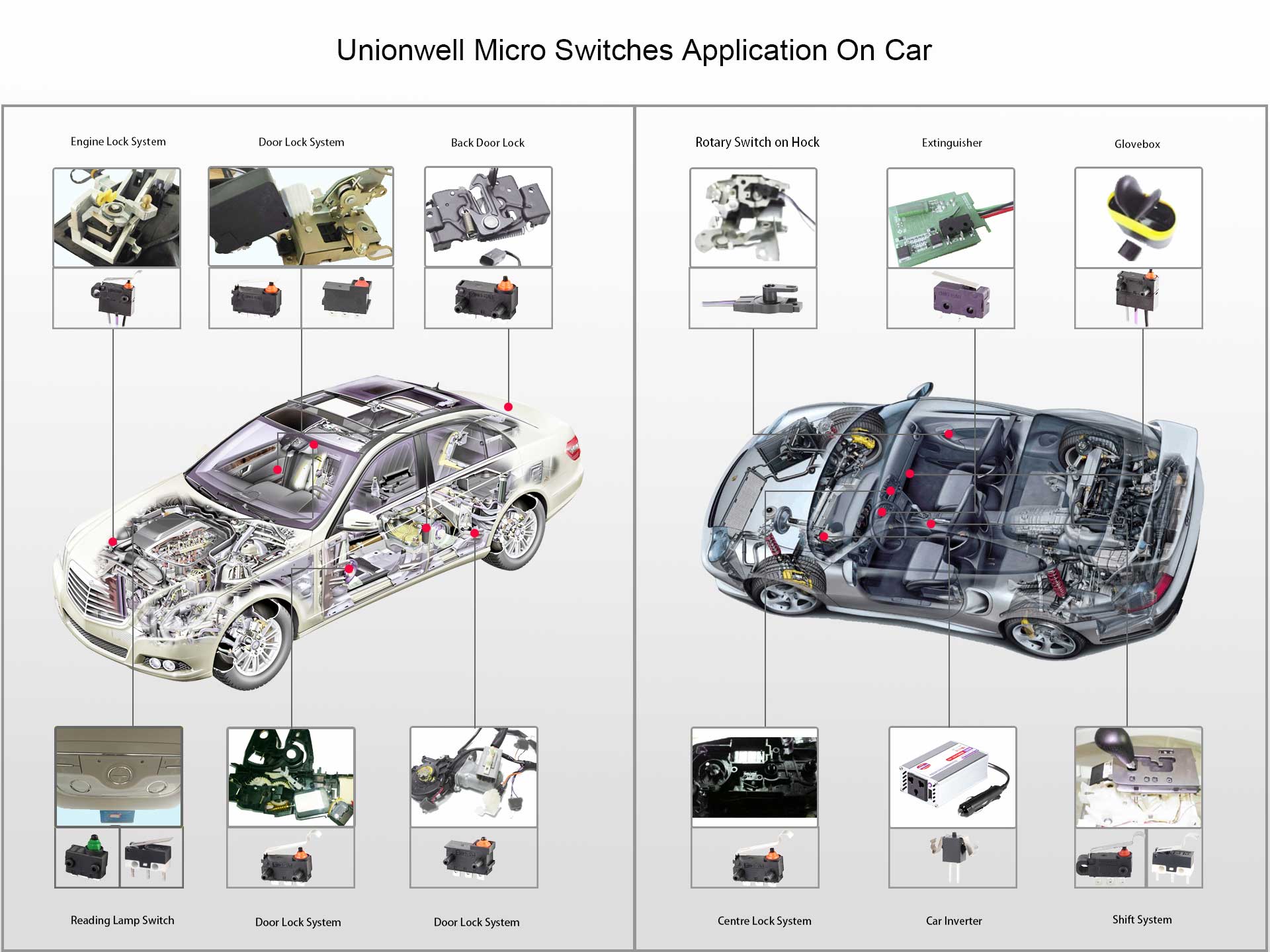
The shift toward electrification has significantly broadened the application scope for automotive micro switches. Beyond the switches traditionally used in internal combustion engine vehicles—such as those for door locks, hoods, and pedals—NEVs incorporate them into a variety of new systems, including charging port covers, electronic locks for charging guns, power tailgates, and electronic parking brake systems. This article examines five types of micro switches commonly used in NEVs, detailing what they detect and how to select them, to help you gain a better understanding of these essential electronic components.
Why New Energy Vehicles Reshaped the Demand for Automotive Micro Switches
The transformation in position detection for NEVs is driven by three key factors:
- Charging Safety Chain: The system must confirm that the charging port cover is "fully open" before prompting the user to insert the charging gun, and verify that it is "fully closed" before lifting driving restrictions. Once the charging gun is inserted, the signal from its electronic lock is critical; if the lock fails to engage properly, the system must trigger an alarm and restrict operation to prevent the hazards associated with unplugging a live charging gun. These are mandatory requirements for charging safety.
- Harsh Operating Environments: The charging port is constantly exposed to rain, wash water, and dust, as well as condensation caused by temperature fluctuations—especially in winter. Furthermore, the component must endure temperature extremes ranging from -40°C to +85°C, combined with constant road vibrations, placing long-term stress on both the electrical contacts and the sealing structure.
- Functional Upgrades: Features such as one-touch power tailgate operation, anti-pinch/reversal mechanisms, and power-cinching functions all rely on accurate, real-time feedback regarding the component's current position.
The convergence of these three requirements is the primary reason for the increased demand for automotive micro switches.
Type 1: Sealed Micro Switches for Charging Ports and Charging Gun Locks
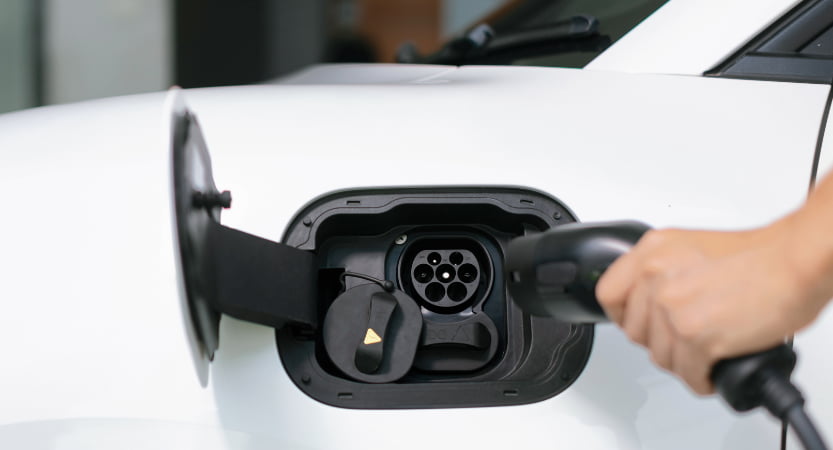
At the charging port, a micro switch detects the open/closed state of the port cover. The system only permits and prompts the insertion of the charging gun when the cover is fully open; conversely, it only restores the "ready-to-drive" status indication when the cover is completely closed. This prevents safety risks—such as the vehicle being driven with the cover not fully closed—which could otherwise allow rain or dust to enter the charging interface.
On the charging gun side, an automotive electronic lock switch verifies whether the locking bolt has reached the fully locked position. Charging proceeds only after a confirmed "locked" signal is received; any locking anomaly triggers an immediate cessation of charging and an alert.
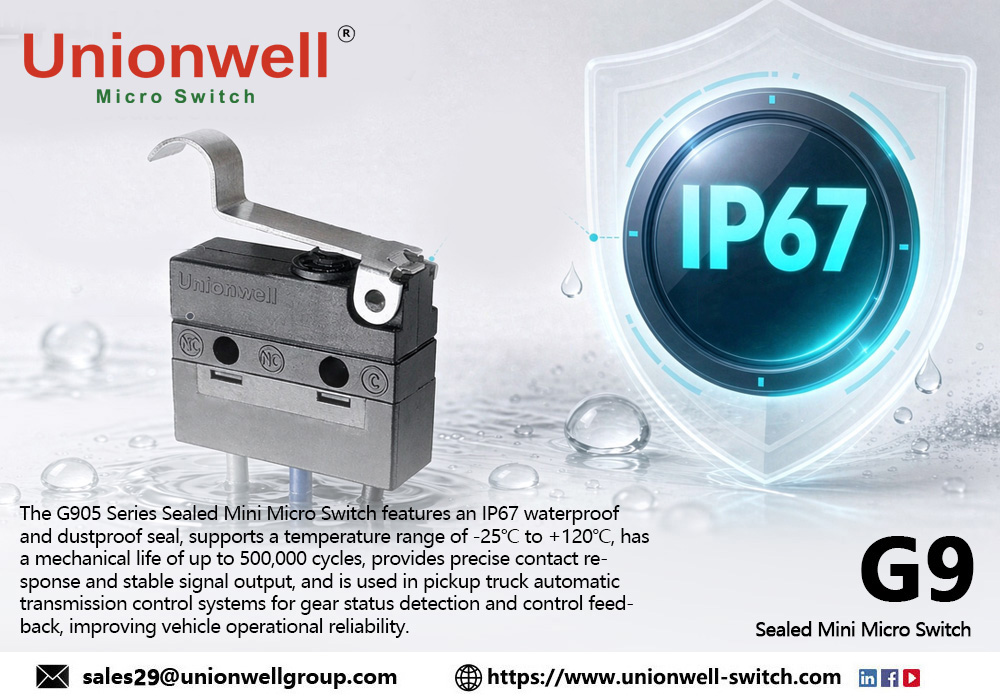
Because disconnecting under load carries the risk of electrical arcing, the switch must provide a clean, bounce-free signal. Furthermore, it requires an IP67-rated sealed structure (dustproof and waterproof), an operating temperature range of -40°C to +85°C, and an operating force of 100–300 gf. Precise specifications and robust protective measures are essential for ensuring an optimal user experience.
Type 2: Subminiature Micro Switches in Door Lock Assemblies
Door locks represent one of the most classic applications for micro switches in automotive systems. Inside the lock assembly, a subminiature micro switch detects whether the latch is in a "fully locked" or "partially locked" (latched but not fully secured) position, converting this status into an electrical signal for the Body Control Module (BCM). This signal supports functions such as suppressing "door ajar" warnings, providing feedback for central locking systems, and enabling key-less entry systems to determine when to lock or unlock the vehicle.
Given the extremely limited space available for switches within the lock assembly, a snap action mechanism is highly recommended. This design uses an internal spring to store energy and trigger an instantaneous state change, ensuring rapid contact switching with minimal bounce and a clean, reliable signal. Moreover, since vehicle doors are opened and closed hundreds of thousands of times over the vehicle's lifespan, the mechanical durability and the consistency of the operating force are critical factors—ultimately determining whether the door-status alerts remain accurate even after a decade of use.
Type 3: High-Temperature Automotive Micro Switches for Hood Latch Detection
Hood latches typically feature a dual-stage locking design, with separate detection circuits for the "partially latched" and "fully latched" positions. A warning is triggered on the instrument cluster when the hood is only partially latched, and this alert is cleared only once the fully latched signal is received. Since an unlatched hood being lifted by airflow while driving poses a far greater risk than a poorly closed door, some vehicle models may also disable remote start or trigger anti-theft alerts if the hood is not securely locked.
For these applications, temperature resistance is the primary consideration. In electric vehicles, the front compartment houses motors, electronic control units, and cooling components in a compact layout, which can lead to elevated localized temperatures. Consequently, it is recommended to select automotive micro switches capable of withstanding high temperatures (e.g., 125°C).
Type 4: Lever and Roller Automotive Micro Switches for Power Tailgates
Power tailgates are among the vehicle systems most dependent on precise position feedback. Lever- or roller-actuated micro switches detect the tailgate’s open/closed and locked positions, sending signals to the tailgate control module. This data supports three key functions: one-touch opening/closing (determining the direction of movement based on the current state), anti-pinch/reversal (stopping or reversing motion immediately upon encountering an obstacle), and power-cinching (transitioning to a low-speed, pull-in phase as the tailgate nears the fully closed position).
Type 5: High-Durability Detector Micro Switches for Pedals, Shifters, and Seat Belts
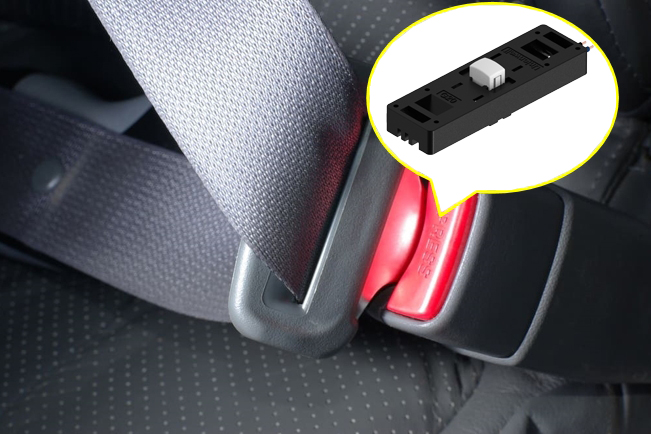
Detector micro switches located at the brake pedal support logic for braking-related functions; those at the gear shifter confirm the "Park" (P) position; and switches within seat belt reminder switch detect whether a seat belt is fastened. Because these components are subject to frequent operation, the selection process prioritizes "durability and consistency." They are designed for mechanical lifespans reaching hundreds of thousands or even millions of cycles, requiring highly stable triggering characteristics throughout their entire service life.
How to Select the Right Automotive Micro Switch for Your Module
Here is a four-step selection method:
- Environment determines the sealing level: For exposed locations or charging ports, choose an IP67-rated (waterproof and dustproof) design; for internal components, the requirements may be relaxed based on the specific temperature zone.
- Mechanism determines the actuator: The required actuation travel and assembly tolerances dictate whether a button, straight lever, or roller-lever actuator is appropriate.
- Space determines the size: Use a subminiature micro switch for compact spaces; for other applications, a basic micro switch may be considered.
- Frequency determines the service life: Calculate the total number of operations expected over the vehicle's entire life-cycle, apply a safety factor, and select a switch with an appropriate rated lifespan.
Each of these four steps addresses a specific aspect, helping to prevent rework caused by situations where "the specifications match, but the part doesn't fit the vehicle."
FAQ
Q1: Why are electronic lock switches used for charging gun locks instead of sensors?
A1: An electronic lock switch directly confirms the physical position of the locking bolt—if it’s locked, it’s truly locked. This provides a "hard" (reliable/direct) signal, is cost-effective, and eliminates the need for additional magnets or magnetic components.
Q2: Does an IP67 seal affect the operating force of a Micro switch?
A2: Yes, it does. Friction between the sealing ring and the actuator increases the actual operating force. This is why the operating force range for sealed switches (e.g., 100–300 gf) is typically broader than that of non-sealed switches of the same size.
Q3: Why are lever and roller-lever actuators preferred for electric tailgates?
A3: Electric tailgate mechanisms involve long travel distances and relatively loose assembly tolerances. A lever amplifies the mechanism's displacement, applying it to the switch's trigger point; this allows for more flexible assembly requirements while ensuring a more stable trigger force. A roller converts sliding friction into rolling friction, preventing wear on the contact surfaces during repeated long-term operation.
Q4: What certifications should one look for in automotive-grade micro switches?
A4: At the system level, consider standards such as IATF 16949 and ISO 9001; at the product level, look for safety certifications like UL, ENEC, or CQC. Furthermore, pay close attention to environmental test reports, specifically the conditions and results for tests such as vibration, thermal shock, damp heat, and salt spray.
Q5: Why are "half-latch" states tested separately for door and hood latches?
A5: Two-stage detection allows the Body Control Module (BCM) to distinguish between a "fully open" state and a "partially latched" state, triggering different levels of alerts. While the former simply prompts the user to close the door, the latter—in certain vehicle models—may escalate to driving restrictions or activate anti-theft logic.
Conclusion
There are five primary categories of automotive micro switches most frequently used in new energy vehicles, corresponding to five key areas of position detection: charging port/connector locking, door latches, hood latches, tailgates, and pedal/seat-belt buckle mechanisms. Consequently, the selection process for automotive manufacturers follows a clear sequence: environmental requirements dictate sealing; mechanical design determines the actuator; signal circuitry defines the contact specifications; and operating frequency dictates the required service life.
Only when a micro switch supplier translates every instance of state detection into verifiable parameters can these small components—automotive micro switches—consistently deliver "crisp, uniform, and reliable" signals throughout the vehicle's entire 15-year lifespan.
The Importance of Using Miniature Micro Switches in Pedestrian Crossing Buttons
The Crucial Role of Dustproof Micro Switches in Soy Milk Makers
Related Article