
What Is a DPDT Micro Switch and How Does It Work?
With the continuous development of electronic systems, switch control systems play a crucial role in modern equipment. They not only need to provide simple on/off functions but also need to accurately switch multiple circuits to ensure efficient and safe operation.
DPDT (Double Pole Double Throw) micro switches, as a type of switch that plays an important role in complex control systems, are widely used due to their high-precision signal switching capabilities. This article will explain in detail what a DPDT micro switch is, how it works, how it achieves synchronous switching of multiple loops, and analyze its advantages in various modern electronic systems.
What Is a DPDT Micro Switch?
Definition of DPDT Micro Switch
A DPDT (Double Pole Double Throw) micro switch is a type of switch capable of controlling two independent circuits. Its name comes from the switch's structure: two input terminals ("Pole") and two output terminals ("Throw"). This structure allows simultaneous control of two loops and switching between different states, facilitating more precise control functions.
Why can a DPDT micro switch handle switching of multiple circuits?
The core advantage of a DPDT micro switch lies in its ability to handle two independent circuits simultaneously. By setting two outputs in each loop, a DPDT switch can achieve complex circuit switching with a single operation. This design makes DPDT switches ideal for multi-loop control systems and widely used in scenarios requiring precise switching of multiple signals.
The difference between a DPDT Micro Switch and an SPDT Micro Switch
Unlike SPDT (single-pole single-throw) switches, DPDT switches have more contact points, thus enabling the simultaneous switching of two loops in a single switching operation. SPDT switches typically have only one input and one output, suitable for scenarios requiring simple, single control, while DPDT micro switches are better suited for systems requiring multi-loop control and synchronous switching.
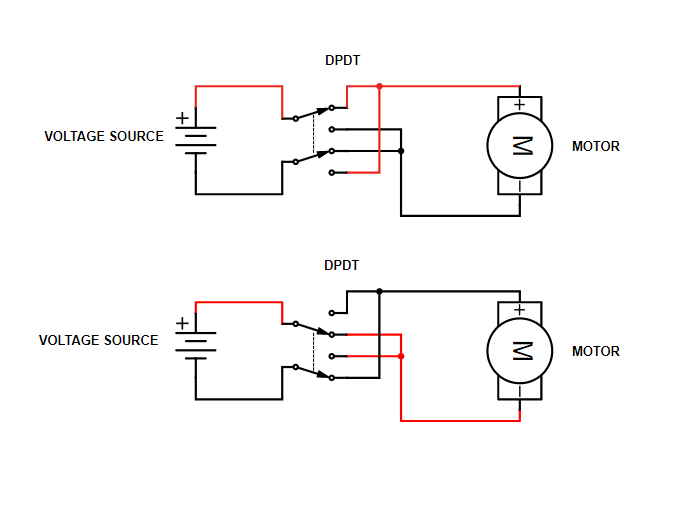
How Does a DPDT Micro Switch Work?
Basic Working Process of a DPDT Switch
A DPDT micro switch, through its double-pole double-throw structure, switches its output after receiving a signal at the input terminal via its internal contact design. Each input terminal is connected to two output terminals, enabling selective switching of the circuit based on the control signal. DPDT switches typically have NO (normally open) and NC (normally closed) contacts, which are switched on or off during operation, creating different circuit states.
The Role of a DPDT Micro Switch in Electrical Systems
DPDT micro switches play a crucial role in electrical systems, particularly in motor drives, signal switching, and circuit synchronization control. By precisely controlling circuit switching, DPDT switches not only ensure circuit stability but also improve system safety and functional reliability. DPDT micro switches are widely used in automotive control systems, home appliances, and industrial equipment to ensure accurate signal processing.
How DPDT Micro Switch Achieves Multi-Circuit Synchronization
Methods for Achieving Multi-Circuit Synchronization
The key to synchronization in a DPDT micro switch lies in its mechanical linkage mechanism: two moving contacts inside the switch are physically fixed to the same insulating material and connected to an external actuator. When you toggle the switch, the contacts of both circuits simultaneously move away from position A and simultaneously engage at position B. Although they are mechanically synchronized, they are electrically completely isolated. This means you can use one circuit to control 12V DC and another circuit to control 220V AC without interference.
Synchronization Mechanism of DPDT Micro Switch
The DPDT switch achieves synchronous switching of two circuits through its internal mechanical linkage structure. Each time the switch is operated, the contacts of both circuits close or open synchronously, ensuring unified operation between the circuits. This synchronization mechanism is crucial for reducing misoperation and improving system stability.
Synchronization Timing and Precision
DPDT micro switches have extremely high requirements for synchronization accuracy during loop switching. The time difference between the closing and opening of each contact can affect system stability, especially in applications requiring high-precision signal transmission. To ensure error-free triggering, DPDT micro switches employ a precise mechanical design and contact structure to ensure that the synchronization time between loops is less than 15ms.
The Advantages of DPDT Micro Switches in Complex Control Systems
High-Efficiency Control Capabilities
One of the greatest advantages of DPDT micro switches is their ability to control multiple loops in a single operation. Compared to other types of switches, DPDT switches offer more control options simultaneously, making them superior in complex automated control systems. This not only improves operational efficiency but also reduces the space requirements of multiple switches.
Enhanced System Reliability and Stability
Through high-precision control, DPDT micro switches effectively reduce system failure rates and improve the long-term stability of equipment. In modern automation, automotive electronics, and industrial equipment, DPDT micro switches provide more precise switching control, ensuring that each operational step proceeds smoothly according to predetermined logic.
Applications of DPDT Micro Switches
Applications in Automotive Control Systems
In modern automobiles, DPDT micro switches are widely used for controlling positions such as the handbrake. Unionwell's G307 Series DPDT Micro Switch can simultaneously switch two sets of contacts with a loop synchronization time of less than 15ms. This compact and reliable product is widely used in automotive handbrake systems. Through precise loop switching for status detection and signal feedback, it enables timely braking and other operations, greatly improving the safety of drivers and passengers.
Applications in Industrial Control
In industrial automation equipment, DPDT micro switches are commonly used for signal switching in valve control, electric actuators, and other devices. Unionwell's G11 Series waterproof DPDT Micro Switch is small and compact, featuring an IP67 fully sealed waterproof and dust-proof design, allowing stable operation in complex industrial environments such as humid and dusty conditions. This product is mainly used in limit switches in automated control systems, enabling precise loop control under high load conditions and improving the operating efficiency of automated production lines.
Conclusion
DPDT micro switches offer unparalleled advantages in multi-loop control, precise synchronization, and reliability. As electronic systems evolve towards greater complexity and efficiency, the application range of DPDT micro switches will become increasingly widespread. They not only meet the precision and efficiency requirements of modern control systems but also play a crucial role in various fields such as automotive, home appliances, and industry. From the perspective of micro switch manufacturers, designing high-quality, long-term stable DPDT micro switches is essential, as they will continue to play a vital role in future electronic devices.
How Refrigerator Door Switch Works in Home Appliances: Function and Principle Explained
Seat Belt Reminder Switch Applications in Modern Automotive Safety Systems
Related Article