What Is a Dustproof Miniature Micro Switch and How Does It Work?
As equipment evolves towards miniaturization and integration, control components need to possess stable electrical performance while maintaining long-term reliable operation within limited spaces. Although dust particles are invisible to the naked eye, they can cause increased contact resistance, poor contact, and even malfunction in mechanical equipment. Against this backdrop, dustproof miniature micro switches have become a key component.
This article will systematically analyze the basic definition, internal structure and working principle, IP40 protection characteristics, and typical application scenarios of dustproof miniature micro switches, helping engineering selection personnel to more clearly understand their technical value and application boundaries.
What Is a Dustproof Miniature Micro Switch?
Basic Definition of a Dustproof Miniature Micro Switch
A dustproof miniature micro switch is a snap action micro switch that achieves dustproof capability through optimized housing sealing design and internal structural path control based on a miniaturized structure. Its core features include "small size," "high sensitivity," "stable triggering," and "dustproof structure."
Miniature Structural Features This type of switch typically adopts a compact housing design, is lightweight, and is suitable for installation inside space-constrained equipment. Their size is often a scaled-down version of the basic micro switch, but they still maintain standard quick-acting mechanisms and reliable electrical parameters.
Dustproof Design Features: The dustproof design controls the dust entry path through structural optimization, reducing the impact of particulate matter on the contact system. This design is suitable for equipment in environments with particulate dust but not extreme pollution, ensuring accurate operation and stable performance during device operation.
The Significance of IP40 Rating in Dustproof Miniature Micro Switches
IP40 is a common protection rating for this type of switch. Defined according to international protection rating standards, it means that it can prevent solid foreign objects with a diameter ≥1.0mm from entering the switch. These solid particles typically include larger dust clumps, metal shavings, or debris. This rating reflects basic dustproof capability, meeting the needs of general industrial equipment and home appliance internal environments.
It is important to emphasize that IP40 prevents larger particles from entering through reasonable structural fit and housing design. Its design goal is to improve long-term operational stability, not for extreme dust or liquid exposure scenarios.
How Does a Dustproof Miniature Micro Switch Work?
Internal Structure of a Dustproof Miniature Micro Switch
- Snap Action Mechanism: This is the core structure of the micro switch. The snap spring stores mechanical energy under pressure and flips rapidly when a critical point is reached, achieving instantaneous contact switching. This structure ensures fast, crisp, and highly repeatable action.
- Moving and Stationary Contact System: The moving contact is driven by the snap spring to contact or separate from the stationary contact, forming a NO (normally open) or NC (normally closed) circuit structure. The contact material can be selected from silver alloy or optionally gold plating to improve conductivity and oxidation resistance.
- Actuator Structure: Common forms include push-button, roller, and lever types. Different actuator structures determine the triggering method and installation direction.
- Housing and Terminal Structure Design: The housing is typically made of high-strength engineering plastic injection molding, and the terminals are precision-molded to ensure spacing and tightness. The structural design directly affects dustproof performance.
Operating Principle of a Dustproof Miniature Micro Switch
Its operating principle can be divided into the following steps:
- External mechanical force is transmitted to the spring mechanism through the actuator.
- The spring begins to store energy during the force application process.
- The carbon plate flips instantaneously after reaching the trigger threshold.
- During the flip, the moving contact and the stationary contact switch rapidly.
- This achieves NO/NC state transition, and external devices receive the signal and take corresponding actions.
The advantage of the fast-acting structure is that it can reduce contact bounce time, reduce the impact of arcing, and improve conduction stability. This instantaneous flipping mechanism is the key to ensuring the high repeatability and stability of the micro switch.
How Dustproof Structure Is Achieved in a Dustproof Miniature Micro Switch
The Dustproof structure is not simply a thicker shell, but is achieved through multiple structural optimizations:
- Sealed shell structure design: The gap between the upper and lower shells is controlled by a high-precision mold, reducing the entry path of particles.
- Terminal area structure optimization: The straight-through gap at the terminal outlet is reduced, and special materials are used.
- Internal Isolation Baffle Design: Internal baffles are installed in critical contact areas to prevent dust from directly falling into the contact areas.
- Precision Injection Molding Process Controls Housing Gap: Injection molding precision directly affects dustproof performance. By controlling the tolerance range, stable structural protection capabilities can be achieved.
Through the above structural design, the dustproof miniature micro switch effectively controls the dust entry path, thereby improving long-term operational stability and enhancing the user experience.
Main technical parameters of dustproof miniature micro switch
The following parameters directly determine the stability and reliability of the dustproof miniature micro switch:
|
Rating |
P1 |
ENEC/UL: 0.1A 125/250V 48VDC Gold plating is optional for the contacts. |
|
05 |
ENEC: 5A 125/250VAC; 5A 1/8HP, 125/250VAC |
|
|
10 |
ENEC: 10(1.5A) 125/250VAC; UL: 10A 1/4HP 125/250VAC |
|
|
Operating Frequency |
Electrical |
10~30 cycles/min |
|
Mechanical |
120 cycles/min |
|
|
Initial contact resistance |
100mΩ Max |
|
|
Insulation resistance |
100MΩ Min |
|
|
dielectric strength |
AC 1,000V RMS(50~60Hz) |
|
|
Operating environment temperature |
-40℃~+125℃ or -40℃~+85℃ |
|
|
Operating environment humidity |
85%RH Max |
|
|
Lifespan |
Electrical |
10,000~100,000 cycles(depend on Specific models) |
|
Mechanical |
Min 1,000,000 cycles |
|
These parameters demonstrate the reliability advantages of this type of switch in long-term use, proving its suitability for high-frequency, high-speed detection scenarios.
Applications of Dustproof Miniature Micro Switch
Dustproof Miniature Micro Switch in Home Appliances
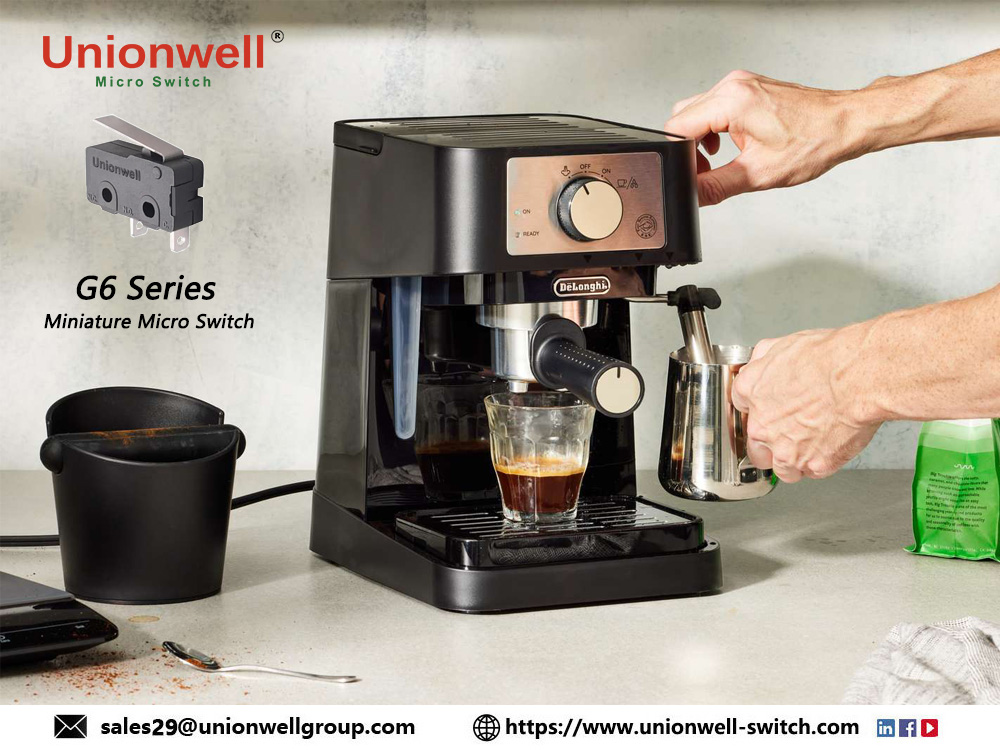
In the internal structures of home appliances, the dustproof miniature micro switch is used to detect the positioning of internal structures in air conditioners, and to provide positional feedback for toy cars (such as whether they have hit a wall). Its IP40 dustproof structure is suitable for dry, dusty environments, improving the user experience of these appliances.
Dustproof Miniature Micro Switch in Industrial Equipment
In the internal modules of automated equipment, this switch is used to detect whether an alarm needs to be triggered or whether the internal structure of the equipment is accurately triggered, ensuring accurate response of the control system.
Applications in Automotive Interior Systems
The interior environment of automobiles typically contains fine particulate dust. The dustproof miniature micro switch can provide a stable trigger signal in such environments, mainly used for dashboard internal detection and triggering of vehicle air conditioning switches.
Conclusion
The dustproof miniature micro switch provides stable and reliable structural control capabilities in dry, dusty environments. Its compact design meets the installation requirements of compact equipment, and its IP40 rating reflects basic dustproof capabilities. Through proper selection, a balance can be achieved between cost and performance.
In home appliances, industrial equipment, and automotive interior systems, these switches serve as critical basic control components, providing reliable assurance for the long-term stable operation of equipment. As a micro switch manufacturer, it is essential to conduct research and development on their service life and size design to meet the mainstream demands of the home appliance and industrial markets.
What Is a Sealed Dual-Circuit Miniature Micro Switch and How Does It Work?
Why Air Pressure Switch Reliability Is Critical in Water Heater
Related Article