What Is a Micro Switch?Key Features, Structure & Applications
In modern society, electrical devices are present in all aspects of our daily lives, from home life and work production to transportation and medical equipment. Electronic components silently ensure the realization of various functions. Among these electronic components, there is a tiny but crucial component—the Micro Switch.
What is a Micro Switch? What is its structure and working principle? Why do most precision devices rely on it? This article will provide readers with a comprehensive, professional, and easy-to-understand introduction to the definition, structure, characteristics, classification, and applications of micro switches, helping you understand this electronic device.
What is a Micro Switch?
Definition of a Micro Switch
A micro switch is an electrical switch that can actuate rapidly through a tiny mechanical displacement. It typically uses mechanical triggering to open and close circuits for functions such as equipment status detection, automatic control, and safety protection. Its most significant characteristic is its short trigger stroke and rapid, precise action.
Basic Working Principle: Minimal Stroke to Rapid Switching
When the actuator is pressed or pushed by an external force, the internal contact structure rapidly shifts, switching between NO (normally open) and NC (normally closed), thus opening and closing the circuit. This process does not depend on the magnitude of the external force but relies on a built-in spring mechanism to achieve rapid switching, known as a "snap-action mechanism."
Why is it called a "micro switch"?
Its name comes from its characteristics of "short trigger displacement, fast response speed, and high action accuracy." Even extremely small displacements can reliably trigger it, making it particularly suitable for mechanical detection and electronic signal feedback requiring high sensitivity and accuracy.
Micro Switch Structure
Despite its small size, the internal structure of a micro switch is meticulously designed to ensure long-term reliable operation. Common components include:
Contact System
Contacts are the core of circuit switching and are typically made of highly conductive and corrosion-resistant materials, such as silver alloys or plated materials. The contact system consists of three terminals:
COM: Common terminal, which is the input terminal of the micro switch in most cases;
NO: Normally open terminal, the contact is open under normal conditions and closes upon triggering;
NC: Normally closed terminal, closed under normal conditions and opens upon triggering.
High-quality contacts reduce contact resistance, suppress arcing, extend service life, and ensure long-term stable operation of the device.
Actuator
The actuator is the moving component that triggers the micro switch. It comes in various forms, typically a Press, Lever, or Roller. By changing the actuator structure, the trigger distance, operating force, and feedback characteristics can be adjusted, allowing the switch to adapt to different equipment environments and space constraints.
Housing
The housing protects internal precision components and is typically made of plastic or metal. Some models possess special properties such as dustproof, waterproof, insulating, and corrosion-resistant properties.
For example, a waterproof micro switch has an IP64~IP67 sealing structure, enabling long-term stable operation outdoors or in high-humidity environments.
Terminals
Their primary function is circuit connection. Common forms include soldered terminals, quick-connect terminals, and PCB terminals. Different terminal types correspond to different equipment structures, providing flexibility for the design of different product models.

Detailed Explanation of Micro Switch Working Principle
Snap-Action Mechanism
Micro switches are preloaded by an internal spring structure. When the actuator is triggered, the internal spring mechanism suddenly releases energy. Upon reaching a critical point, it immediately bounces to the other end, causing the contact to switch states instantaneously—this is the snap-action mechanism. This mechanism enables accurate and rapid triggering with extremely short strokes, significantly reducing contact bounce.
Actuating Force, Rebound Force, and Total Actuating Force
Actuating Force (OF): The necessary force applied to the actuating contact when moving from the free position to the actuated position;
Rebound Force (RF): The necessary force applied to the actuating contact when moving from the limit position to the return position;
Total Travel Force (TTF): The necessary force applied to the actuating contact when moving from the actuated position to the limit position.
These detailed definitions of forces collectively determine the user experience and sensitivity of different micro switch models, significantly impacting the overall performance of the micro switch.
Key Features of Micro Switches
Sensitive and Rapid Response
The snap-action structure of micro switches results in extremely fast response times, enabling stable operation in electronic devices requiring rapid operation or frequent state switching.
Long Lifespan
Most micro switches have a mechanical lifespan of 1 million to 10 million cycles and an electrical lifespan of 50,000 to over 100,000 cycles, resulting in a long service life with virtually no need for maintenance or replacement.
High Reliability and Stability
In medical equipment or automotive applications, precise detection and stability are crucial for ensuring long-term equipment use, and micro switches excel in these areas.
Strong Environmental Resistance
Some outdoor environments or factory equipment have high environmental requirements, and high-quality micro switches can withstand high and low temperatures, performing well even in challenging environments.
Versatile Operating Force
Different micro switch models offer options for light or heavy contact depending on equipment requirements, and their triggering methods also vary, ensuring that there are suitable models available for various situations.
This is the key reason why micro switches can operate stably for a long time in many devices and are used by various industries.
Classification of Micro Switches
Basic Micro Switch
As the most common type of micro switch, basic micro switch is simple in structure, widely applicable, and widely used in the market. It is frequently seen, especially in home appliances, industrial equipment, and automation devices.
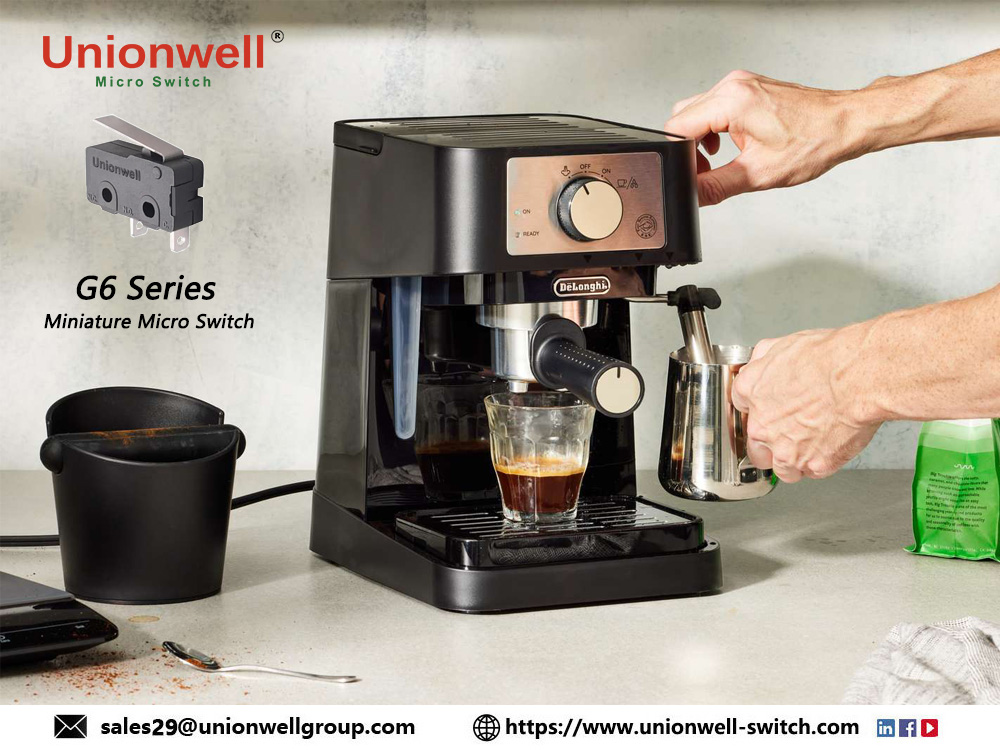
Miniature Micro Switch
Compared to the basic micro switch, miniature micro switch is smaller, lighter, and occupies less space, featuring a compact design while retaining the high sensitivity and reliability characteristic of micro switches. It is widely used in equipment with strict space requirements.
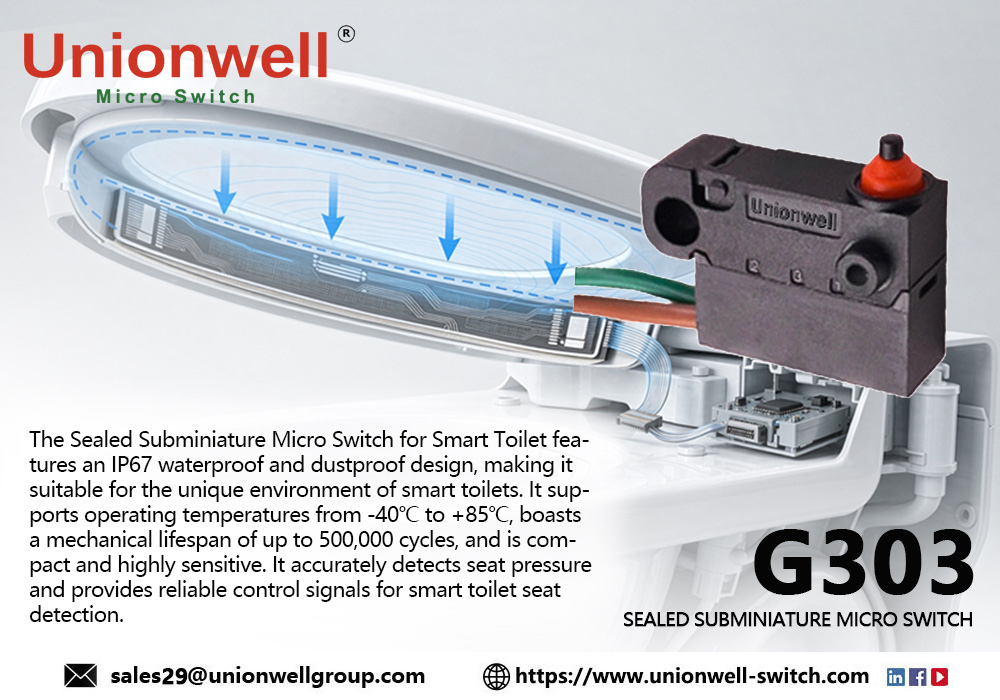
Sealed Micro Switch
These switches achieve waterproof and dustproof protection through a sealed structure and typically meet IP64/IP67 protection ratings. Sealed micro switches effectively resist the intrusion of moisture, dust, and other external factors, and can operate normally in harsh environments without being affected by water immersion, dust, or oil.
Locking/Non-Locking Types
Micro switches can also be classified into locking and non-locking types based on their triggering mechanism. These two types of switches have different working principles and applicable scenarios.
Self-locking micro switches: When a self-locking micro switch is pressed, it locks in a certain state until it is released by pressing it again. These switches are ideal for scenarios requiring continuous operation in a specific state, such as emergency stop buttons. The self-locking mechanism ensures the device remains in a specific state, preventing unintentional changes in state.
Non-locking micro switches: Non-locking micro switches only hold the pressed state when pressed and return to their original state when released. They are commonly found in trigger control systems and are suitable for devices that do not require a long-term maintained state, such as sensor switches and control buttons.
Applications of Micro Switches
Home Appliances
Micro switches are widely used in home appliances, especially in microwave ovens, electric door locks, and rice cookers. They are used to ensure safe operation, automatic on/off control, and monitoring of operating status. For example, a microwave oven door switch prevents the appliance from starting if the door is not properly closed, ensuring user safety.
Industrial Control
In industrial automation equipment, micro switches are used for limit control, safety detection, and process control. Many industrial devices need to operate under high-frequency and high-intensity environments; the high sensitivity and stability of micro switches are crucial for ensuring normal operation. For example, limit control switches for robotic arms can monitor the arm's movement in real time, preventing over-limit operation.
Automotive Industry
Micro switches are widely used in the automotive industry. Functions such as door locks, seat adjustments, and electric tailgates all require the support of micro switches. Due to the automotive industry's extremely high requirements for equipment reliability, durability, and high performance, waterproof and dustproof micro switches have become standard equipment in this industry.
Consumer Electronics
Micro switches are equally important in consumer electronics. Common applications include mouse buttons and power detection. Micro switches, with their fast response and long lifespan, effectively support the usage requirements of these electronic products, ensuring device stability.
Conclusion
Micro switches, as simple yet powerful and highly reliable electrical switches, are widely used in home appliances, industrial control, automotive, medical, and consumer electronics. Their highly sensitive fast triggering mechanism, long lifespan, and high reliability make them an indispensable component of devices.
Whether it's a basic micro switch, a miniature micro switch, or a waterproof micro switch, each provides a reliable and stable solution for different application needs. For customized or high-performance micro switches, contact a professional micro switch manufacturer for more specialized application support and technical solutions.
What Is a Basic Micro Switch? Everything You Need to Know
Related Article