The Role of Micro Switch in Electronic Charging Gun
With the continuous growth of the number of new energy vehicles globally, electronic charging guns have become one of the most crucial devices used by new energy vehicle users in their daily charging routines. Throughout the charging process, the electronic charging gun not only transmits electrical energy but also requires an internal electronic lock structure to ensure strict control over insertion and removal actions, thereby preventing safety hazards such as accidental removal, loosening, and poor contact.
As the core of the electronic lock structure, the micro switch is responsible for performing locking detection, unlocking feedback, and insertion/removal identification, enabling the charging gun to seamlessly match the charging safety logic. This article will delve into the actual role of the micro switch in the charging gun, helping readers understand how it makes the electronic lock structure of the charging gun more reliable, its positioning more accurate, and improves security and user experience.
What is a Micro Switch?
Basic Definition of a Micro Switch
A micro switch is a high-precision micro switch with snap-action characteristics. Its internal spring structure achieves instantaneous contact transitions, allowing it to immediately complete circuit switching upon reaching the actuation point. Due to its high trigger sensitivity, excellent action consistency, and strong durability, it is particularly suitable for applications requiring precise detection and real-time feedback.
In an electronic charging gun, the micro switch acts as a "status detector" for the electronic lock structure, quickly determining the locking status, whether an unlocking action has occurred, and whether the charging gun is correctly inserted into the vehicle's charging port. It provides a very low-current signal to the control board, triggering the charging control system to accurately process locking, unlocking, and charging initiation operations.
Structural Characteristics of the Micro Switch
The micro switch mainly consists of a housing, contact system, actuator, and spring:
Housing: Made of high-strength engineering plastic, it features high temperature resistance, aging resistance, and mechanical shock resistance, providing stable protection for the internal structure.
Contact System: Circuit switching is achieved through rapid switching between moving and stationary contacts. The contact material is typically a silver alloy to ensure conductivity and long lifespan.
Actuator: Depending on structural requirements, it can be a button, lever, or roller. Charging guns typically use a short-stroke, high-stability actuation method.
Spring: As the core of the snap action, it ensures the switch completes the snap action instantaneously at the critical point, improving action consistency.
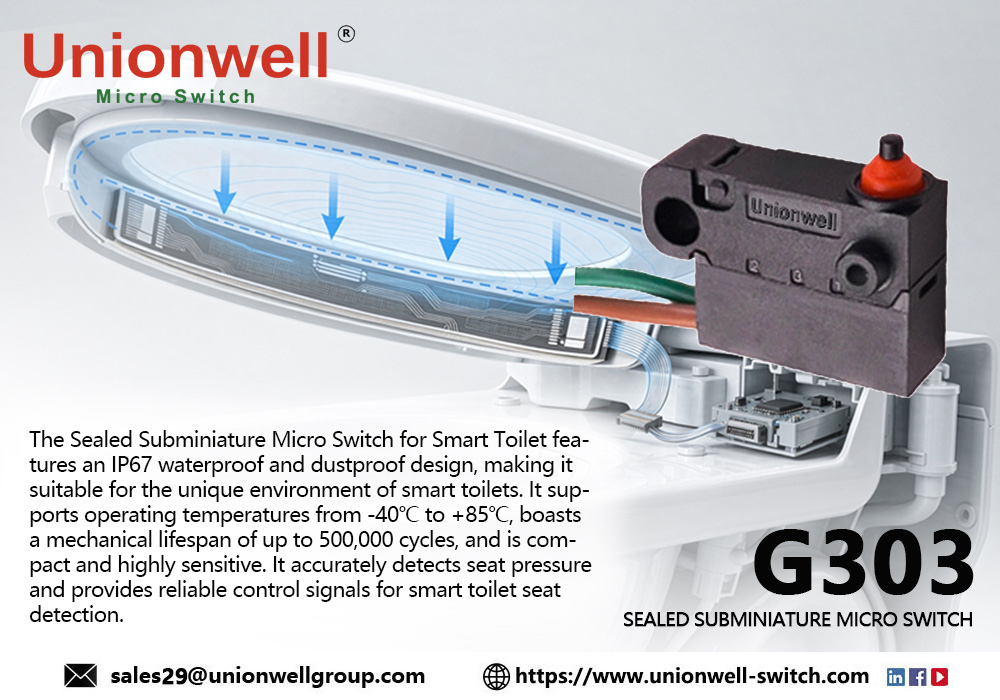
In the operating environment of electronic charging guns, the devices are often exposed to outdoor rain, dust, mud, and humidity. Therefore, a micro switch with an IP67 waterproof rating is also required to ensure that critical components will not fail due to moisture or contaminants, thereby guaranteeing the stable performance of the electronic lock structure.
The Core Role of the Micro Switch in the Electronic Charging Gun
Used for "Locking Position Detection" in the Electronic Lock Structure
After the charging gun is connected to the vehicle's charging port, the electronic lock automatically extends its locking pin and secures the gun body in the interface. During this process, the micro switch performs the following tasks:
Monitoring whether the locking pin is fully advanced:
When the locking pin reaches the predetermined position, the micro switch is triggered, sending back a "locking complete" signal.
Avoiding false judgments caused by partial locking:
If the locking pin is not fully in place, the micro switch will not trigger, and the system will prevent charging from starting, preventing the gun body from loosening during high-voltage charging.
Providing a reliable locking state for the charging station and vehicle control system:
The locking signal is simultaneously sent to the vehicle and the charging station, putting the entire charging logic into a safe state.
In short, the micro switch is the "judge" of the electronic lock structure; its accuracy directly determines charging safety.
Ensuring accurate triggering of the "unlocking action"
When charging is finished or the user needs to remove the gun in an emergency, the electronic lock will perform an unlocking action. The micro switch's functions at this stage include: providing real-time feedback on whether the locking pin has fully retracted, preventing jamming; sending a "can be removed" signal to the control system, synchronizing the entire system; ensuring smooth user operation without jamming or inability to remove the charging gun; and providing mechanical feedback even in emergency power outages to prevent users from mistakenly believing the charging gun has been unlocked.
The micro switch's consistent action and fast feedback eliminate jamming or structural wear caused by incomplete unlocking, reducing wear and tear on the charging gun.
Stable Detection of Charging Gun "Plug-in/Unplugged Status"
The micro switch can also monitor whether the charging gun is correctly inserted into the vehicle's charging port. Its judgment mechanism includes: whether the insertion depth is sufficient and whether the locking mechanism is operating; whether the contact structure is fully in place; whether the connection is stable and secure, and whether there are any erroneous operations.
When insertion is insufficient, the micro switch will not trigger, and the charging system will not allow charging, thus avoiding potential hazards caused by arcing or poor contact. This stable plug-in/unplugged detection not only improves safety but also enhances the charging experience, allowing users to operate with confidence.

How Micro Switch Improves the Safety and Performance of Electronic Charging Guns
High-Precision Action Ensures Consistent Locking Actions
The micro switch has a clearly designed operating point and release point that do not significantly shift over long-term use. This stability ensures that the locking detection always maintains the same trigger position, avoiding errors affecting the results; the entire device will not experience false or missed triggers due to wear, reducing potential accidents; the electronic lock structure maintains reliable operation over the long term, providing an excellent user experience.
IP67 Waterproof Design Enhances Outdoor Environmental Adaptability
Charging guns are often used in outdoor environments, exposed to rain, humidity, dust, mud, and other conditions. Therefore, the waterproof performance of the micro switch is crucial. The advantages of the IP67 rating include:
1. Preventing moisture ingress and contact corrosion;
2. Preventing dust accumulation from reducing trigger accuracy and even affecting the normal operation of the entire switch;
3. Maintaining consistent action and stable triggering even in extreme weather conditions.
This allows the charging gun to maintain stable operation in harsh northern climates, humid southern climates, or salty coastal environments.
High-Lifespan Design Adapts to Frequent Insertion and Removal Scenarios
Electronic charging guns are high-frequency used devices, involving insertion, locking, unlocking, and removal with each charge, thus requiring extremely high component lifespan. High-quality charging gun lock switches typically have a mechanical lifespan of tens of thousands to hundreds of thousands of cycles, maintaining consistent operating points even after prolonged use and being less prone to malfunctions due to fatigue or wear. This ensures stable and reliable performance of the charging gun throughout its entire lifespan, better serving consumers.
Micro Switch Application Flow Diagram in Charging Gun
The following is a breakdown of the micro switch's role and logic in the entire charging gun process:
When the owner inserts the charging gun:
- The micro switch checks if the insertion depth meets the requirements;
- Only when it does, does the control system allow the electronic lock to prepare to perform the locking action.
After the locking action is completed:
- The charging gun's locking pin is fully advanced;
- At this point, the micro switch sends back a "locked" signal;
- This signal allows the control system to start high-voltage charging, and the charging system officially begins.
Even during charging, the micro switch maintains a locked confirmation state to prevent accidental removal and potential safety hazards.
When charging is complete (fully charged):
- The control system sends a "execute unlock" signal;
- The micro switch detects this signal and the locking pin retracts, and sends back a "unlocked" signal;
- The user can now safely remove the charging gun, and charging is complete.
As you can see, the micro switch's judgment affects the entire charging process and is the foundation of the entire safety logic.
Conclusion
As the most critical detection component in the locking structure of an electronic charging gun, the micro switch plays an irreplaceable role in "locking and positioning detection," "unlocking feedback," "plug-in/plug-out identification," and "outdoor environmental stability." Its high sensitivity, IP67 waterproof capability, and long lifespan design ensure high reliability even in harsh environments.
For charging gun manufacturers, choosing a high-quality micro switch designed by a micro switch manufacturer means more stable product performance, lower after-sales costs, and a better user experience. With the increasing prevalence of charging infrastructure globally, the importance of the micro switch will continue to rise, and it will remain one of the most crucial components in electronic charging gun safety systems.
What Is a Double-Break Micro Switch and How Does It Work?
A Complete Guide for Beginners about the Miniature Micro Switch
Related Article