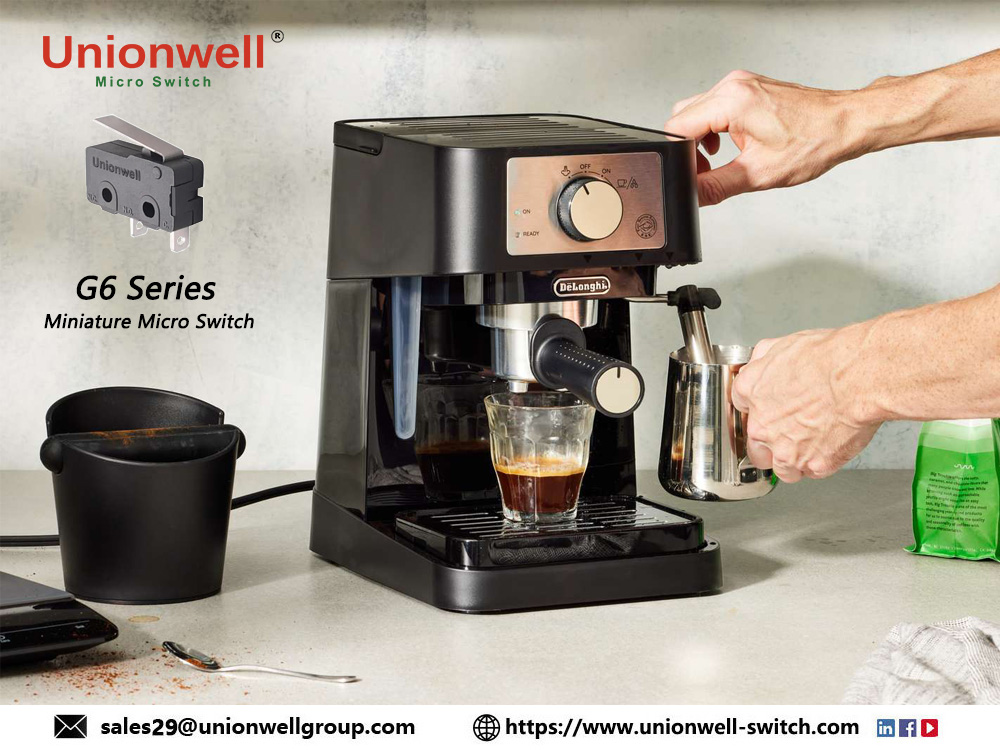
Why Miniature Micro Switch Is Critical for Sweeping Robot
2026-02-08
In recent years, robotic vacuum cleaners have evolved from their initial basic cleaning function into intelligent home appliances integrating path planning, obstacle avoidance, and multi-mode operation. With the continuous addition of functions, the overall design is evolving towards intelligence, light-weighting, and compactness, which places demands on internal components to be small in size and maintain long-term stable operation under complex conditions.
Internally, many motion judgments rely on reliable mechanical feedback components. Among them, the miniature micro switch, due to its small size, precise action, and reliable response, occupies a core position in robotic vacuum cleaners. This article will systematically analyze why the miniature micro switch is crucial to robotic vacuum cleaners, focusing on practical application scenarios, and providing an in-depth explanation from the perspectives of structure, principle, reliability, and application.
What Is a Miniature Micro Switch?
A miniature micro switch is a micro switch highly optimized for size, installation method, and triggering accuracy. It typically employs a snap-action structure, completing reliable contact switching within a very short stroke.
Structurally, miniature micro switches typically feature small size, compact internal structure, and clear and repeatable contact actions. These switches are usually designed to perform precise on/off control within a limited space, making them ideal for space-constrained devices with frequent operations.
Compared to basic micro switches, miniature micro switches are generally more suited to low-current control scenarios, requiring higher precision, consistency, and structural stability. They support system logic operation by providing stable and clear control signals. They are commonly used in functional modules such as position detection, status feedback, and safety confirmation.
The Core Role of the Miniature Micro Switch in Robotic Vacuum Cleaners
In robotic vacuum cleaners, the primary function of the miniature micro switch is position detection and status feedback. When the robot collides, reaches a boundary, or completes structural reset, the system needs to immediately obtain a clear status signal, and the micro switch is the key component to achieve this function.
The miniature micro switch is triggered by the mechanical displacement of the external structure, converting the physical action into an electrical signal input to the main control system. This "mechanical-electrical" conversion method has the advantages of direct response, clear logic, and no reliance on complex algorithms, making it particularly important in robotic vacuum cleaners.
Compared to electronic sensing solutions, the micro switch provides deterministic signals. Once a contact action occurs, the control system can clearly determine the current state without complex data processing. This determinism directly affects the robotic vacuum cleaner's path determination, direction adjustment, and anomaly handling. Therefore, the stability and consistency of the miniature micro switch directly relate to whether the robotic vacuum cleaner can accurately execute action judgments, avoiding misjudgments, omissions, or logical inconsistencies, thereby ensuring the reliability of the entire machine's operation.
Why Sweeping Robot Design Requires a Miniature Micro Switch
The internal structure of a robotic vacuum cleaner is highly integrated, with components such as the drive motor, sensors, battery, and control board concentrated in an extremely limited space. The size, installation method, and placement of any component will have a ripple effect on the overall design.
Under such structural conditions, a miniature micro switch, with its smaller size and more flexible installation, can be integrated into edge spaces, corner locations, or near moving parts. Furthermore, robotic vacuum cleaners contain numerous relatively moving structures, such as collision buffer mechanisms, roller brush assemblies, and suspension wheel systems, which place extremely high demands on the switch's triggering accuracy and repeatability.
It is precisely because of the dual requirements of space utilization and structural precision in robotic vacuum cleaners that the miniature micro switch is virtually irreplaceable in their design.
How Miniature Micro Switches Work in Sweeping Robot Applications
In sweeping robots, miniature micro switches are typically triggered through direct contact or indirect transmission of mechanical components. For example, when the robot's front end collides with something, the buffer structure undergoes a slight displacement, pressing or releasing the micro switch's actuator. This triggering method offers advantages such as simple structure and rapid response. The action of the external structure is directly translated into a change in the contact state, allowing the control system to acquire feedback signals in a very short time and adjust its operating strategy accordingly.
The Role of Snap Action Structures in Miniature Micro Switches
The snap action structure is one of the core design features of miniature micro switches. Its characteristic is that upon reaching the trigger point, the contact switches rapidly, rather than transitioning slowly. This rapid action mechanism effectively avoids contact jitter and unstable conduction.
In sweeping robots, the snap action structure ensures that each trigger outputs a clear and clean signal, reducing the risk of false triggers or ambiguous signals. This is particularly important for control systems that rely on frequent feedback.
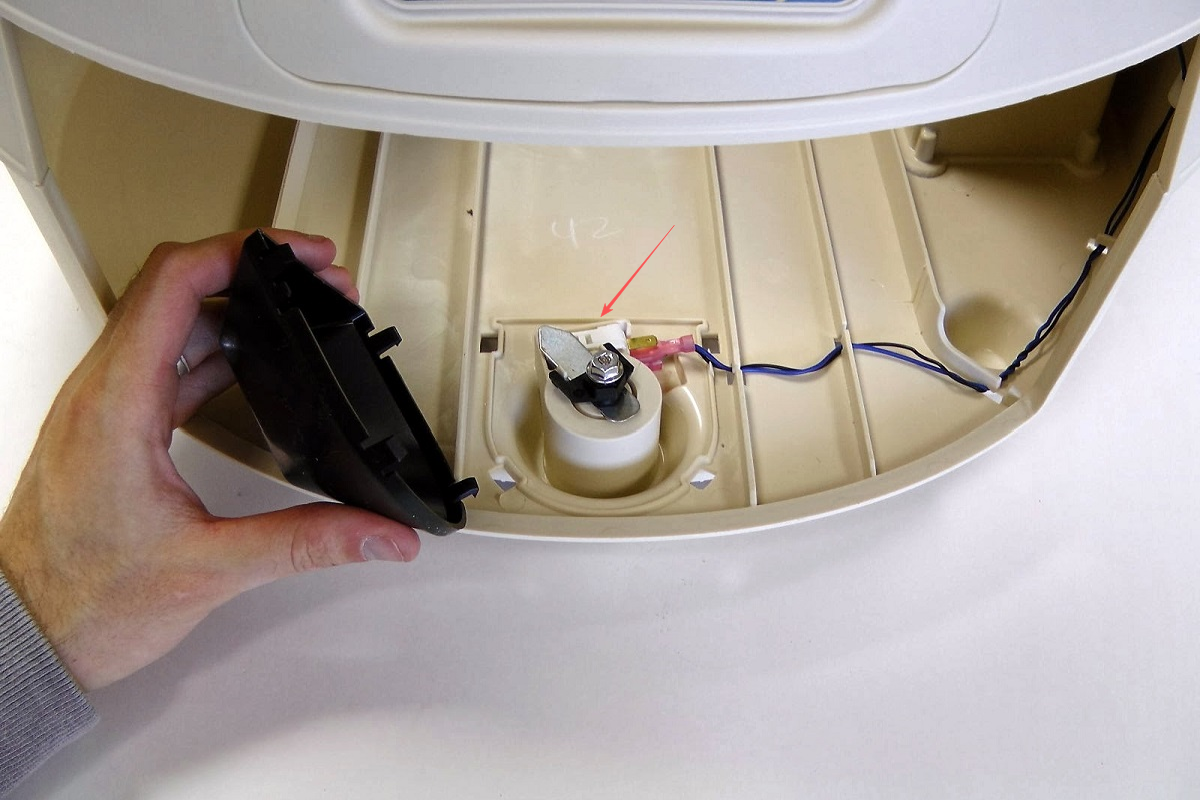
Contact Design and Signal Reliability of Miniature Micro Switches
The micro switches in robotic vacuum cleaners typically operate in low-current control environments, placing demands on contact materials and structural design: the contacts must not only possess good conductivity but also maintain stable consistency over long-term use. Appropriate contact material selection can effectively reduce contact resistance variations and signal attenuation, thereby ensuring the long-term stable operation of the control system.
The Impact of Miniature Micro Switches on the Reliability of Robotic Vacuum Cleaners
Robot vacuum cleaners experience high-frequency triggering scenarios in daily use, such as repeated collisions, frequent turning, and multiple reset actions. This places stringent requirements on the mechanical lifespan of the miniature micro switch. If the micro switch experiences contact fatigue, inconsistent action, or insufficient rebound after prolonged use, it will directly lead to incorrect state judgments, affecting the overall function of the machine and even causing system failure. Therefore, a stable mechanical structure, highly consistent contact action, and reliable rebound performance are non-negotiable core indicators for miniature micro switches in robotic vacuum cleaner applications.
Typical Application Scenarios of Miniature Micro Switches in Robotic Vacuum Cleaners
In practical applications, miniature micro switches are widely used in the collision detection systems of robotic vacuum cleaners to determine the presence of obstacles. They are also used for boundary recognition, assisting the robot in confirming whether it has reached the edge of the work area.
Furthermore, in structural position confirmation and reset detection, miniature micro switches provide clear status feedback to the system, ensuring that mechanical components are always in the expected position. Micro switches also play a crucial role in safety protection and abnormal status feedback.
Conclusion
Overall, miniature micro switches are an indispensable key component for the stable operation of robotic vacuum cleaners. Through a reliable mechanical feedback mechanism, they provide a clear and stable signal foundation for the intelligent control system, profoundly impacting control accuracy, overall machine reliability, and user experience.
From the perspective of micro switch manufacturers, as the structure of robotic vacuum cleaners continues to evolve, the requirements for switch consistency, lifespan, and stability will only continue to increase. In future applications of robotic vacuum cleaners, high-quality miniature micro switches will remain a crucial foundation for ensuring product performance and brand value.
What Is a Sealed Clamp Micro Switch and How Does It Work?
Why Miniature Micro Switch Is Essential for Toothbrush
Related Article

Discover why home appliance micro switches are widely used for position detection, safety interlocks, control inputs, and mechanical state feedback.
Why Do Many Home Appliances Use Micro Switch?
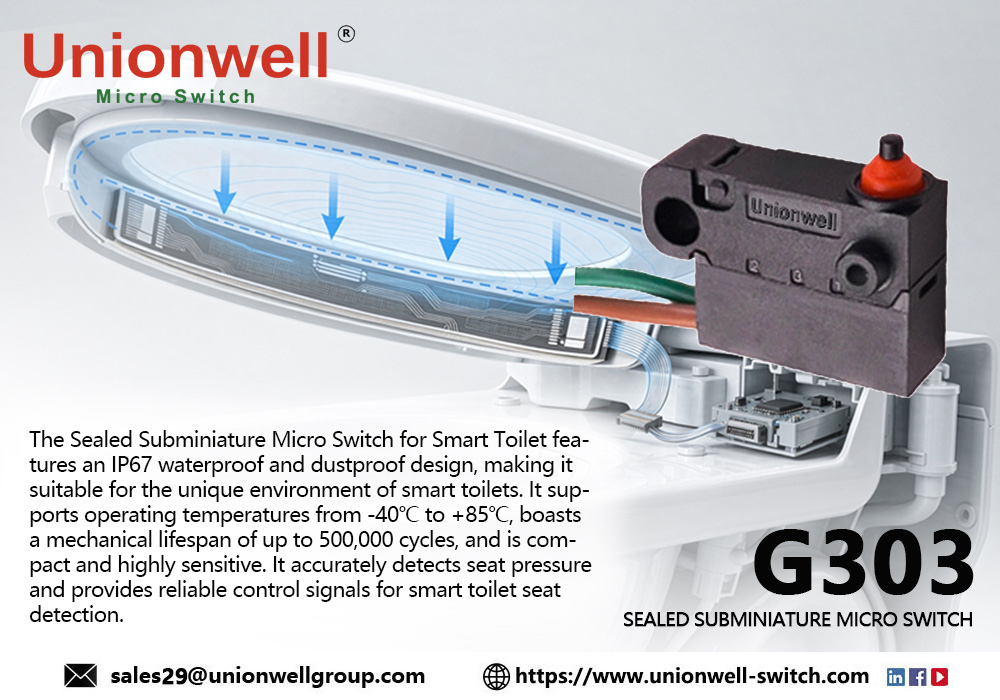
Discover how sealed subminiature micro switches detect toilet seat occupancy through pressure and mechanical displacement.
Why Is a Sealed Subminiature Micro Switch Used for Smart Toilet Seat Detection?