Why Is a Sealed Subminiature Micro Switch Used for Smart Toilet Seat Detection?
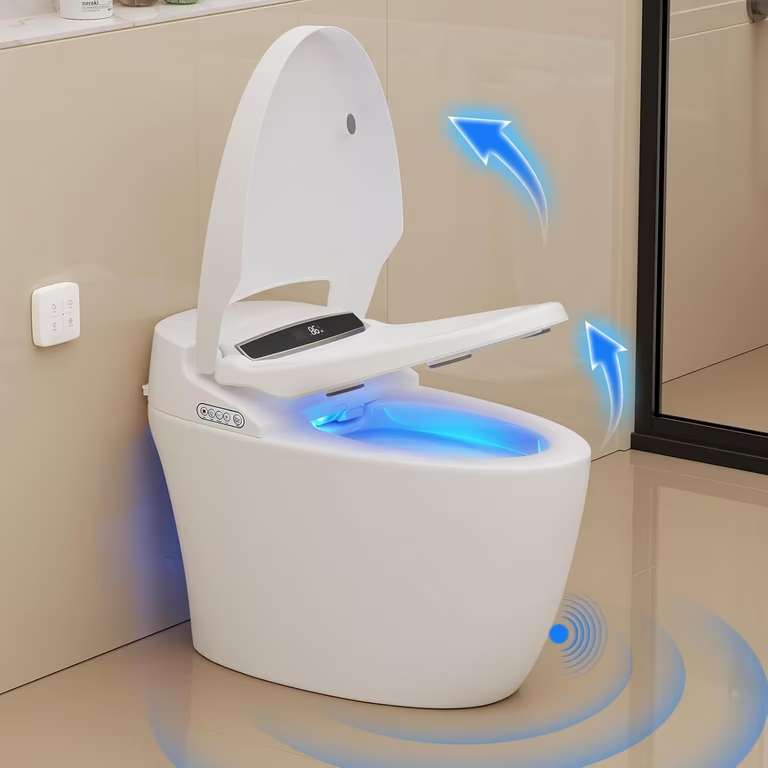
Smart toilet seat detection requires accurately determining whether a user has sat down; the operating principle relies on detecting changes in pressure and displacement caused by the user's weight on the seat. When a user sits correctly, the seat and its support structure are subjected to downward pressure, and the control system must convert this mechanical change into a distinct electrical signal.
A sealed subminiature micro switch is typically installed near the bottom of the seat, the support structure, or the internal transmission mechanism. It does not bear the user's weight directly but instead senses pressure changes via other mechanical structures. This article introduces the operating principle of sealed subminiature micro switches in smart toilet seat detection and analyzes their value regarding installation space, reusability, environmental adaptability, and the prevention of false triggering.
What Is a Sealed Subminiature Micro Switch in Smart Toilet Seat Detection?
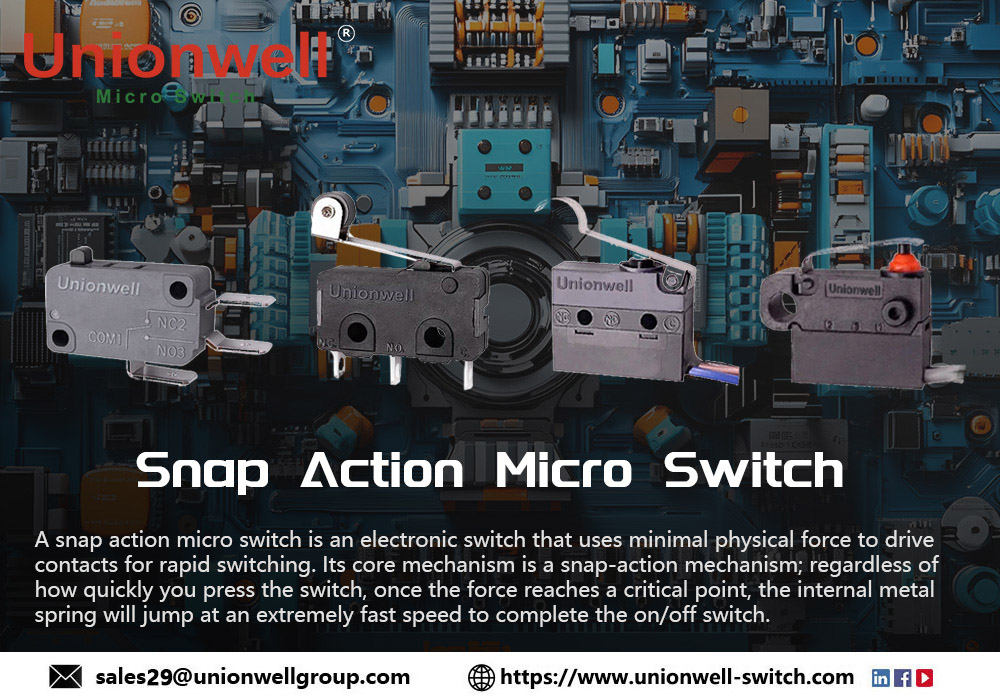
A sealed subminiature micro switch is a compact mechanical switch featuring a snap-action mechanism. It primarily consists of a housing, an actuator, a spring mechanism, and both movable and fixed contacts; it can be configured as SPST or SPDT depending on circuit requirements. When an external component pushes the actuator to a set position, the internal spring mechanism causes the contacts to switch rapidly, thereby changing the circuit state.
Most sealed subminiature micro switches feature an IP67 protection rating, making them suitable for devices where space is limited and stable signal output is required. In smart toilet seat detection, the switch is usually installed near the seat's support points or pressure-transmission mechanisms to detect the displacement caused by pressure on the seat.
The Basic Function of a Sealed Subminiature Micro Switch
When a user sits down, the seat is subjected to downward pressure, which is transmitted to the switch actuator via support components or a transmission mechanism. Once the actuator moves to the operating position, the internal contacts switch, outputting a signal indicating "user seated" or "seat under pressure."
It is important to note that a sealed subminiature micro switch outputs a signal based on mechanical state. While it can determine whether the seat has reached the designated trigger state, it cannot independently determine the user's weight, posture, or whether the device is being used correctly. The final detection performance depends on the integrated coordination of the seat structure and the control program.
How Does a Sealed Subminiature Micro Switch Detect Whether Someone Is Sitting?
The core mechanism of smart toilet seat occupancy detection involves converting the pressure exerted by the human body on the seat into mechanical displacement, which then triggers a sealed subminiature micro switch to output an electrical signal. The entire process encompasses pressure transmission, actuator triggering, contact switching, and control system recognition.
Pressure Transmission from the Toilet Seat
When a person sits down, pressure is first applied to the seat's surface and then transmitted via support points at the bottom of the seat to a fixed structure or elastic mechanism. The seat's rigidity, shape, and mounting method influence pressure distribution and transmission paths. Therefore, the micro switch should be installed in alignment with the actual force transmission path to ensure that the seating pressure is effectively converted into the displacement of a plunger, slider, or support component. In this setup, the switch primarily bears the localized force exerted by the transmission mechanism rather than the user's full body weight.
Triggering the Micro Switch After Seating
Once the seat is subjected to sufficient pressure, the transmission component pushes the actuator of the sealed subminiature micro switch. The switch operates between an actuation position and a reset position. When the actuator moves to the actuation point, the internal contacts switch rapidly; when the user stands up, the external pressure is removed, the mechanical structure returns to its original position, and the switch resets.
The actuation position determines when the occupancy signal is output, while the reset position determines when the signal ceases after the user leaves the seat. The differential travel between these two points helps prevent frequent switching (chatter) caused by minor seat vibrations, structural rebound, or pressure fluctuations.
Sending the Seating Detection Signal
Upon the switching of internal contacts, the sealed subminiature micro switch outputs a status signal to the control board via its terminals. When the seat is unoccupied, the input remains in a preset state; when the user sits down, the contacts switch and the circuit state changes, allowing the control program to recognize that the seat is occupied. For smart toilet control boards utilizing low-current electronic inputs, contact specifications should be selected based on actual voltage, current, and minimum applicable load requirements.
Why Is a Sealed Subminiature Micro Switch Suitable for Smart Toilet Seat Detection?
Compact Size for Concealed Installation
Smart toilet seats contain numerous internal components and wiring, leaving limited space for installation. Thanks to their small size, sealed subminiature micro switches can be installed at the bottom of the seat, near support brackets, or within internal cavities, minimizing their impact on the overall layout.
By selecting different actuators, engineers can adjust the installation method based on the seat's direction of movement. The compact structure not only saves internal space but also shortens the pressure transmission path, facilitating concealed installation.
Stable Switching for Repeated Seating Detection
Smart toilet seats undergo frequent seating and unseating cycles daily. Sealed subminiature micro switches must maintain stable actuation positions and reset performance over the long term; otherwise, issues such as contact wear, changes in operating force, or inconsistent actuator movement may arise. These problems could lead to a failure to signal when the seat is weighted or a failure to reset promptly after the user stands up.
Therefore, key factors to consider during selection include mechanical life, operating force, contact structure, and actuation consistency. Even though these waterproof micro switches offer a mechanical life of hundreds of thousands of cycles, care must be taken to avoid excessive lateral force or over-travel from the actuation mechanism, as off-center loading can shorten the actual service life.
Sealed Construction for Bathroom Environments
Bathroom environments often involve exposure to water vapor, condensation, cleaning agents, and contaminants. If these substances penetrate the micro switch over time, they can cause contact oxidation, fluctuations in contact resistance, or mechanical malfunctions.
Sealed subminiature micro switches mitigate the risk of environmental ingress through features such as sealed housings, sealing covers, or flexible sealing structures. However, this does not imply that the entire smart toilet unit possesses the same level of protection; comprehensive protective design is still required for terminals, wiring harness connectors, and mounting holes.
How Does a Sealed Subminiature Micro Switch Prevent Incorrect Seat Detection?
Distinguishing Seating Pressure from Light Contact
When a user sits down, body weight exerts sustained pressure on the seat ring; conversely, light touches, hand pressure, or brief vibrations may generate pressure characterized by short duration, minimal displacement, or incorrect directional force. Engineers can enhance the ability to distinguish between a genuine seated state and incidental contact by adjusting the switch's operating force, the seat ring's support structure, and the transmission ratio.
Avoiding False Triggering During Seat Movement
Displacement, rebound, or vibration can occur when the seat ring opens, closes, or is subjected to impact. If the micro switch is improperly positioned, the actuator may be triggered accidentally. To prevent false actuation, the mechanical design should incorporate clear limit stops to prevent the seat ring from directly striking the actuator. An appropriate gap must be maintained between the transmission component and the switch to avoid continuous pressure when the seat is not occupied.
While control circuits can mitigate brief disturbances through input filtering or software-based confirmation timing, these measures cannot replace sound mechanical design. Reliable seat detection signals are achieved only when the switch, seat ring support structure, and control logic are properly matched.
Conclusion
In smart toilet seat detection applications, sealed subminiature micro switches convert the user's presence into a clear electrical signal by detecting the pressure or displacement caused by body weight on the seat ring. The operational sequence involves the seat ring being subjected to pressure, the support structure undergoing displacement, transmission components actuating the switch, internal contacts switching state, and the control system receiving the status signal.
Thanks to their compact size, stable snap action mechanism, and robust mechanical lifespan, sealed subminiature micro switches are well-suited to the space constraints within the seat ring assembly. Therefore, when selecting a sealed subminiature micro switch from a professional micro switch supplier, ensuring that the switch's parameters align perfectly with the smart toilet seat's mechanical structure is essential for achieving long-term, stable, and accurate user detection.
Why Do Many Home Appliances Use Micro Switch?
Why Use a Subminiature Micro Switch in Commercial Snow Melt Machines?
Related Article