What Makes a Snap Action Micro Switch Ideal for Home Appliance Applications?
Modern home appliances are evolving towards intelligence, miniaturization, and high reliability. From washing machines and rice cookers to air conditioners, various appliances require numerous control components for status detection, function switching, and safety control. Among these, the snap-action micro switch, with its fast response, stable triggering, and compact structure, has become a common solution in home appliances. This article will delve into its working principle, core advantages, and important role in various home appliances.
What Is a Snap Action Micro Switch?
Understanding the Working Principle of a Snap Action Micro Switch
The snap-action structure is the core technical feature of a micro switch. With minimal mechanical displacement, it stores energy through an internal spring mechanism and releases it instantaneously upon reaching a set trigger point, thus quickly completing the contact switching action.
When the external actuator is subjected to pressure, the internal spring mechanism begins to deform and store energy. When a preset threshold is reached, the spring quickly flips, pushing the contact system to complete the conduction or disconnection. This structure ensures high consistency in action; regardless of the operating speed, switching is completed with a similar triggering method, thus guaranteeing stable control signal output.
Main Components Inside a Snap Action Micro Switch
A snap action micro switch typically consists of several key components:
- Actuator: Responsible for receiving external mechanical actions.
- Snap Action Mechanism: Responsible for storing and rapidly releasing energy; the core component for achieving snap action.
- Contact: Handles circuit connection and disconnection.
- Terminal: Used to connect to the device's control circuitry for signal transmission.
- Case: Responsible for securing internal components and providing mechanical protection.
These components work together to ensure the switch maintains stable operating performance during extended operation.
Why Snap Action Micro Switches Are Widely Used in Home Appliances
Snap Action Micro Switches Support Reliable Appliance Control
Home appliances contain a large amount of control logic. Snap action micro switches can be used for device start/stop control, status detection, position feedback, and safety interlock control.
As a home appliance micro switch, it can confirm whether the appliance door is closed, whether components are in place, and whether a function has switched successfully. It can convert mechanical actions into reliable electrical signals, thereby helping the control system accurately determine the device status.
Fast Response Makes Snap Action Micro Switches Highly Effective
Modern home appliances emphasize user experience; therefore, control components must have fast response capabilities. The snap action micro switch's fast-acting structure can complete contact switching in a very short time, avoiding control delays caused by slow action and effectively improving device control efficiency.
Long Service Life Meets Daily Appliance Usage Requirements
Home appliances are high-frequency use devices; washing machines, rice cookers, air conditioners, etc., all place high demands on switch lifespan. High-quality snap action micro switches have a mechanical life of hundreds of thousands or millions of cycles, which can meet the needs of long-term repetitive operation and reduce the probability of failure.
Common Home Appliance Applications of Snap Action Micro Switch
Snap Action Micro Switch in Washing Machines
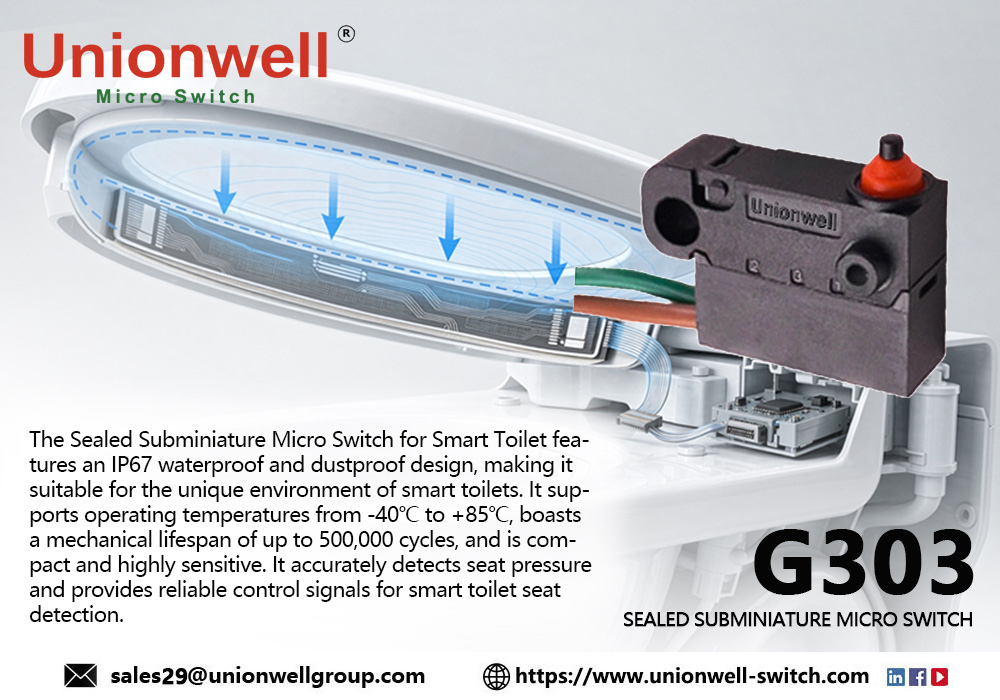
In washing machines, switches are commonly used for door lock status detection. The system will not start if the door is not properly closed, thus preventing safety issues during operation. Because washing machines operate in a humid environment, waterproof micro switches are used to improve long-term operational stability. As a home appliance micro switch, its role in the washing machine is not only related to the operation of the equipment but also to user safety.

Snap Action Micro Switch in Rice Cookers
During rice cooker cooking, switches can be used to switch between heating and keep-warm modes, or to detect the lid status, ensuring the equipment operates under correct conditions. Because cooking equipment needs to withstand high temperatures for extended periods, the stability and lifespan of the switch's operation are crucial; its reliability directly affects the rice cooker's performance and user experience.

Snap Action Micro Switch in Air Conditioners
Snap action micro switches can be used in air conditioner panel control systems, damper position detection, and maintenance door status confirmation. Air conditioner installation environments may be affected by condensation, making waterproof micro switches highly valuable. Their stable operation helps air conditioners maintain reliable performance over long periods.
Other Home Appliance Micro Switch Applications
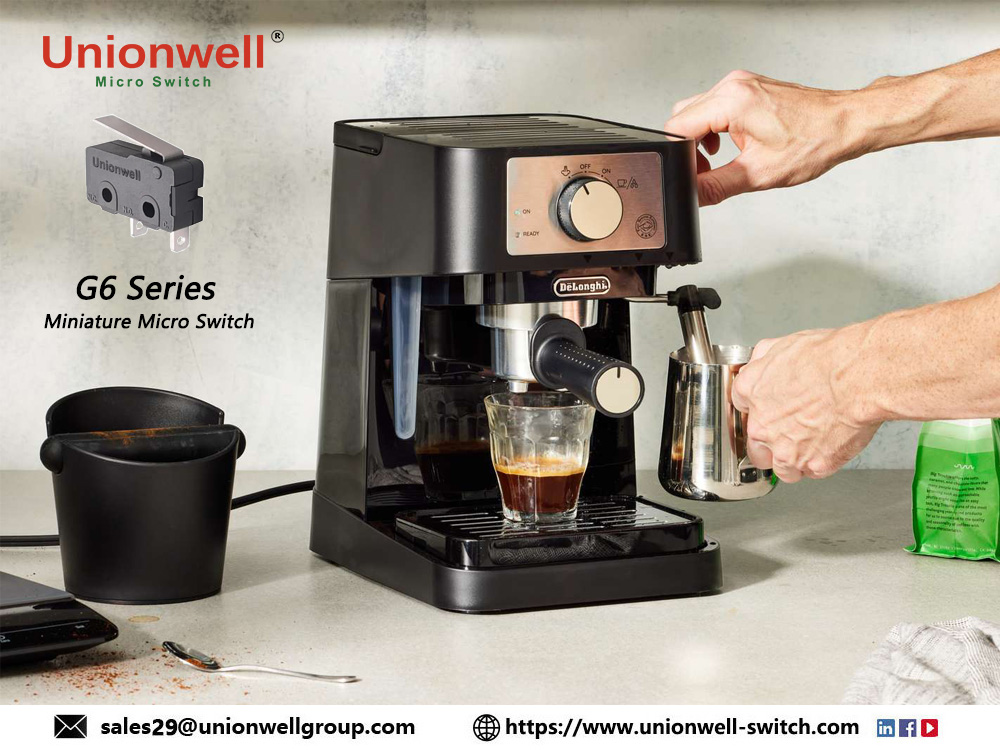
Besides the products mentioned above, snap-action micro switches are widely used in various home appliances such as microwave ovens, coffee makers, and dishwashers. As a home appliance micro switch, it has become deeply integrated into people's daily lives. Although users rarely notice its presence, many key functions rely on its stable operation.
Key Features That Make a Snap Action Micro Switch Ideal for Home Appliance Applications
Compact Design Fits Modern Appliance Structures
Modern home appliances are increasingly space-constrained, and the small size and flexible installation of the snap action micro switch allow for easy integration into various complex structures. This enables it to adapt to the ever-growing trend of compactness in modern home appliances.
Stable Contact Performance Improves Reliability
The contact system is a crucial foundation for switch performance. A high-quality snap action micro switch possesses stable conduction performance and reliable disconnection capability, reducing control anomalies, mitigating the risk of signal misinterpretation, and helping devices maintain consistent operating conditions over long periods—essential for home appliances.
High Mechanical Life Supports Long-Term Operation
Home appliances are typically used continuously for many years; therefore, switches also need a sufficiently long lifespan to ensure consistent operating characteristics after repeated operation, reducing equipment failure rates and improving user satisfaction.
Why Home Appliance Manufacturers Prefer Snap Action Micro Switch
Cost-Effective and Reliable Solution
After years of development, the snap action micro switch boasts a stable manufacturing process and reliable performance, meeting the control needs of the vast majority of home appliances. For manufacturers, it allows for cost control while ensuring reliability, making it highly valuable.
Easy Integration into Different Appliance Designs
Different home appliances have different structural designs. The snap action micro switch offers multiple installation methods, various terminal blocks, and multiple drive types. This allows it to adapt to various product structural requirements, enabling faster design and integration, and shortening product development cycles.
Supports Future Smart Home Appliance Development
As the smart home industry continues to develop, home appliances demand increasingly higher control precision and status detection capabilities. As a home appliance micro switch, it continuously provides reliable basic control capabilities for home appliances. With increasing automation, its application scope will continue to expand.
FAQ
Q1. Why do different home appliances use different specifications of snap-action micro switches?
A1. Because different home appliances have different operating currents, installation space requirements, operating frequencies, and control requirements, it is necessary to select switches with corresponding specifications.
Q2. How should home appliances with limited installation space choose snap-action micro switches?
A2. Prioritize compact products that match the installation method and meet electrical parameter requirements.
Q3. Do snap-action micro switches require regular maintenance?
A3. Generally, no maintenance is required, but it is best to check the connection status and installation location during equipment maintenance.
Q4. What are some common phenomena that occur when a snap-action micro switch in a home appliance fails?
A4. Issues may include the device being unable to start or stop, buttons becoming unresponsive, or intermittent functional failures.
Q5. What are the practical benefits of choosing a high-quality snap-action micro switch for home appliance manufacturers?
A5. It helps improve product reliability, reduce after-sales repair rates, extend equipment lifespan, and increase end-user satisfaction.
Conclusion
Snap-action micro switches play a crucial role in home appliance applications. From startup control and status detection to safety interlocks and position feedback, many key functions rely on their stable and reliable operation, making them an essential component of modern home appliance control systems.
For home appliance manufacturers, choosing high-quality snap-action micro switches from professional micro switch suppliers not only improves product reliability and safety but also optimizes user experience and enhances market competitiveness. With continued development, snap-action micro switches will continue to play an irreplaceable and vital role for a long time to come.
Why Basic Micro Switch Is Important in Printer Design
Why Use a Subminiature Micro Switch in Electric Vehicle Charging Station Position Detection?
Related Article