Why Do Many Home Appliances Use Micro Switch?
As home appliances evolve, an increasing number of devices utilize a structure where control boards, motors, sensors, and actuators work in concert. In these devices, the electronic control system requires continuous status information from the mechanical components. This is a key reason why micro switches are widely used in home appliances.
Micro switches change their internal contact state via mechanical actuation, converting the movement of buttons, lids, sliding mechanisms, or other moving parts into distinct ON/OFF electrical signals. This article explores micro switches by examining their operating principles, applications in home appliances, and product selection criteria.
What is a Micro Switch?
A micro switch is a compact switch that changes the state of an internal circuit through mechanical action. It consists of components such as an actuator, a snap-action mechanism, internal contacts, terminals, and a housing. In home appliances, it integrates directly with mechanical structures, converting mechanical movement into an electrical state that the control system can recognize.
How Does a Home Appliance Micro Switch Work?
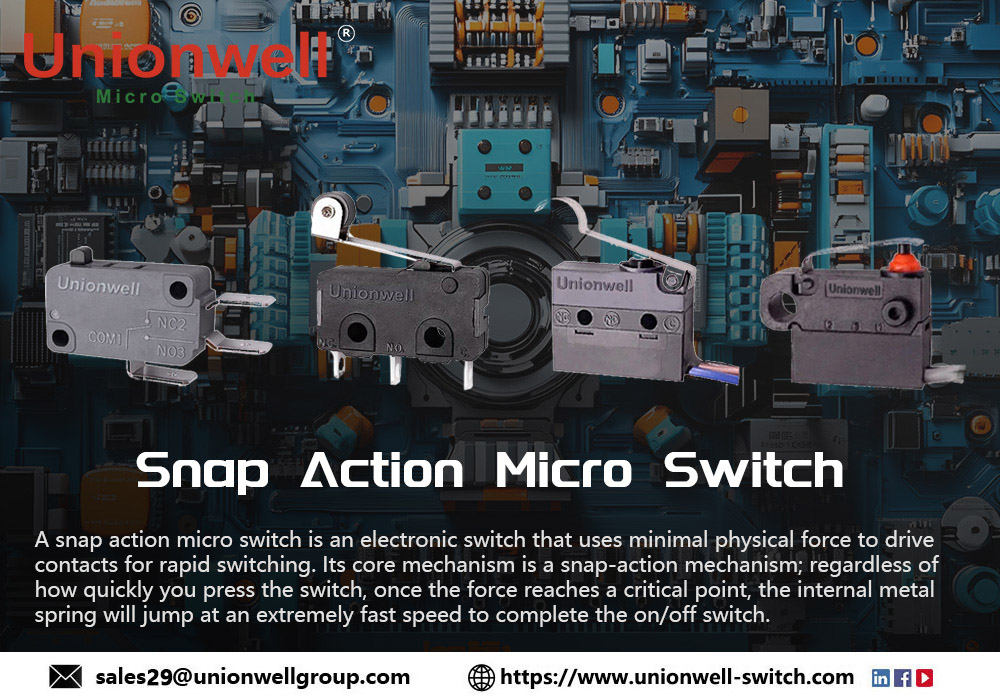
The operating process is as follows: when a mechanical component moves to a designated position, it pushes the micro switch's actuator. Upon receiving pressure, the internal spring and snap action mechanism move. When the trigger point is reached, the internal contacts switch rapidly, thereby changing the circuit state. This allows for a quick, definitive state transition once specific conditions are met, enabling the control circuit to determine whether the mechanical component has reached the intended position.
Micro switches come with various actuator types—such as pin plungers, rollers, or levers—and different terminal configurations. For appliance manufacturers, this versatility allows the switch to align with the direction of movement, operating distance, and available installation space of the mechanical structure, ensuring reliable triggering.
What Makes Micro Switches Different from Other Switches?
The suitability of home appliance micro switches is closely linked to their compact size, actuation method, and contact mechanism:
- Their small physical footprint allows for installation within the limited space inside appliances, optimizing the overall structural design;
- They feature a precise mechanical trigger point, eliminating the need for a long, continuous operating stroke;
- The snap action mechanism enables rapid contact switching, making them ideal for appliances that require frequent position detection.
In summary, compared to other types of switches, micro switches are better suited to the diverse applications found in various home appliances.
Why Do Many Home Appliances Use Micro Switches?
Micro Switches Provide Reliable Position Detection
Many home appliances require confirmation that mechanical components have reached a specific position; micro switches can be installed along the movement paths of these components. When a component moves and actuates the switch, the contact state changes, allowing the control system to read the signal and execute the corresponding function.
Micro Switches Support Safety Interlock Functions
Some appliances require operational decisions based on component positioning. For instance, if a lid or cover is not in the correct position, the control system may need to halt specific actions. In such applications, the micro switch acts as a status-sensing component, providing a clear input signal to the control system so the control circuitry can execute the appropriate logic.
Compact Size Fits Limited Space Inside Home Appliances
Modern home appliances must accommodate motors, control boards, wiring harnesses, and other electronic components alongside their mechanical structures. Consequently, switches should not consume excessive installation space. The compact design of micro switches allows for installation near various mechanical components; furthermore, diverse actuator types and terminal orientations enable layout adjustments to suit available space, ensuring switch specifications align seamlessly with the product's structural design.
Fast Switching and Repeated Operation
Home appliances are frequently used, so micro switches must withstand long-term, repetitive operation. Rapid contact switching ensures a distinct electrical state, while excellent mechanical durability—indicating the number of operations the switch can endure under specified conditions—helps optimize the overall user experience.
Where Are Home Appliance Micro Switches Used?
Micro Switches in Toothbrush Sanitizers
Toothbrush sanitizers require detection of the lid's current state to control device operation. A micro switch can be installed near the lid's path of movement; when the lid closes, it—or a connecting structure—pushes the switch's actuator, changing the contact state. The control system uses this signal to determine whether to initiate sanitization, thereby preventing UV light from exposing the user's eyes.

Micro Switches in Electric Water Faucets
Electric water faucets contain internal heating, control, and mechanical operating mechanisms. A micro switch within the faucet can detect the position of the mechanical operating mechanism, converting user actions into a state recognizable by the electronic control system to trigger functions such as heating.
Micro Switches in Refrigerators
Refrigerators are another common application for micro switches in home appliances. A refrigerator door switch detects whether the door is open or closed and sends an input signal to the relevant circuitry. Based on this change, the control circuit determines the door's status and triggers actions such as turning the interior light on or off.

Micro Switches in Microwave Ovens
Detecting the state of the microwave oven door is another application for micro switches. When the door is opened or closed, the door mechanism engages or releases the micro switch's actuator, altering the internal contact state. The control circuit receives this input regarding the door's status and determines subsequent operations based on the device's control logic.
How to Choose a Home Appliance Micro Switch?
Consider Operating Force and Travel
Operating force determines the amount of force required from a mechanical component to trigger the switch, while operating travel relates to the actual displacement the component can provide. Excessive operating force places a burden on the mechanical structure, whereas mismatched travel can lead to insufficient triggering or mechanical over-travel. Therefore, designers should determine appropriate parameters based on the actual movement trajectory.
Consider Electrical Rating and Contact Configuration
The micro switch's rated voltage and current must match the actual circuit and load requirements. Additionally, contact configurations—such as SPST or SPDT—must be determined based on the circuit design. Different contact structures correspond to different circuit connection methods; selection should not be based solely on product dimensions.
Consider Mechanical and Electrical Life
Mechanical and electrical lifespans must be evaluated in the context of the appliance's actual operating conditions. Mechanical life focuses on the number of repetitive cycles the switch can withstand, while electrical life depends on factors such as load, voltage, current, and contact operating conditions. Consequently, selection should be based on the product's life-cycle and projected number of operations.
Consider Temperature and Environmental Conditions
Operating environments within home appliances vary and may involve exposure to moisture, oil, or other complex conditions. Therefore, when selecting a micro switch, one must verify the operating temperature range, structural protection capabilities, and material compatibility based on the specific installation location. For locations where there is a risk of moisture or contaminant ingress, a waterproof micro switch should be considered.

Conclusion
Home appliance micro switches change their internal contact state via mechanical actuation, providing clear electrical inputs to control systems. Beyond their compact size, they adapt to diverse mechanical structures through various actuator types, contact configurations, and terminal styles. This ability to bridge mechanical action and electronic signaling is invaluable for appliances requiring frequent operation, position detection, or status feedback.
When selecting a micro switch from a micro switch supplier, it is essential to comprehensively consider all parameters and the actual installation environment. Although the functions and structures of home appliances vary, they all require reliable mechanical state sensing. Through a simple yet precise mechanism of mechanical actuation and electrical feedback, the micro switch serves as a vital interface between the appliance's mechanical structure and its electronic control system.
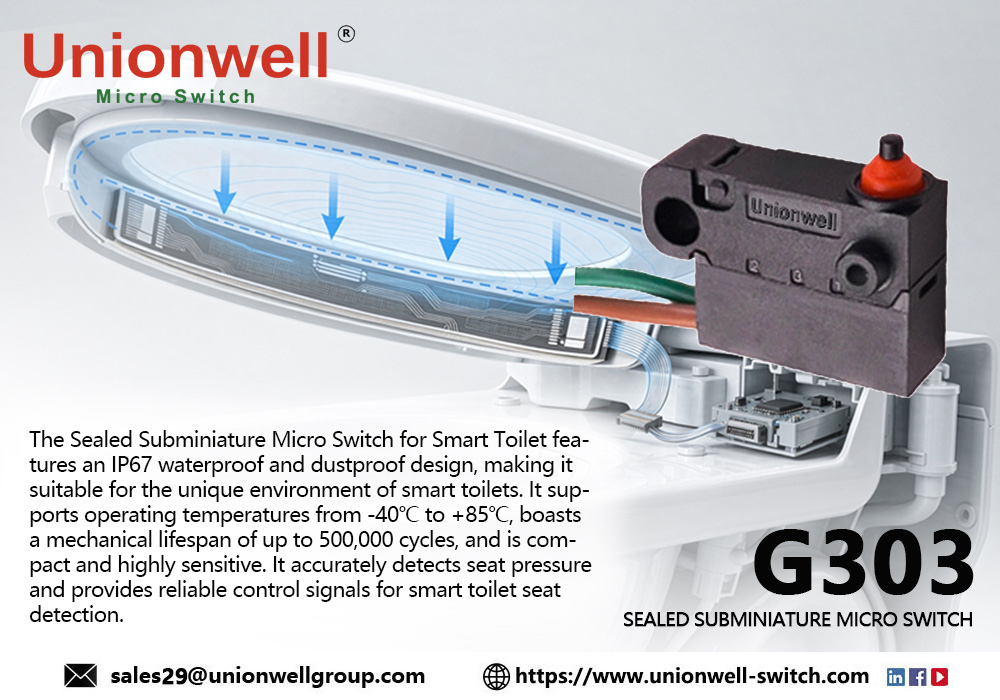
Why Is a Sealed Subminiature Micro Switch Used for Smart Toilet Seat Detection?
Related Article