What Is the Future Development of Snap Action Micro Switch?
Snap Action Micro Switches are fast acting mechanical switches. Their core features, besides their small size, include the ability to quickly switch contact states after the actuator reaches a specific position, thus providing a relatively clear and repeatable ON/OFF electrical signal. This allows them to directly connect to mechanical motion and electronic control systems, making them widely used in various devices such as home appliances, automobiles, industrial equipment, and medical instruments.
According to data from Mordor Intelligence, the global Micro Switch market is projected to grow from $830 million in 2026 to $1.1 billion in 2031, maintaining a CAGR of 5.49% from 2026 to 2031. Against the backdrop of miniaturization, hermeticity, automotive electronics, industrial automation, and smart devices, how will Snap Action Micro Switches continue to meet new system demands in the future? This article will analyze this question.

What is the current development status of the Snap Action Micro Switch?
Why does the Snap Action Micro Switch remain widely used?
The Snap Action Micro Switch achieves rapid switching through an internal spring and contact mechanism, allowing the contacts to quickly change state after reaching a predetermined action position, thus providing a clear ON/OFF signal to the control circuit. Provided the mechanical structure, actuator, and contact parameters are properly matched, this unique rapid action mechanism enables stable state detection.
Its structure includes a housing, actuator, spring mechanism, contact system, and terminal. Manufacturers can adjust the actuator, operating force, electrical load, and mounting method to adapt their products for different applications. Therefore, the Snap Action Micro Switch is widely used in automotive, medical, industrial, and everyday equipment fields.
Current Market Demand for Snap Action Micro Switches
Currently, customer focus on snap action micro switches has shifted from basic on/off functionality to performance throughout the entire product life-cycle:
- With increasing integration of PCBs, sensors, motors, and control modules, internal space in devices is becoming more limited, increasing the application value of subminiature and miniature micro switches.
- The switch's operating force and actuation position must match the external mechanical structure; otherwise, position detection or control logic problems may occur.
- The switch needs to maintain acceptable contact states, operating forces, and position parameters after millions of repeated actions.
- Parameters such as electrical load, actuator type, and environmental protection also influence selection; some applications also need to withstand factors such as vibration, humidity, dust, and temperature changes.
In conclusion, future product upgrades will still be based on mature mechanical switch technology.
How Will Miniaturization Change Snap Action Micro Switch?
Smaller Snap Action Micro Switch for Compact Devices
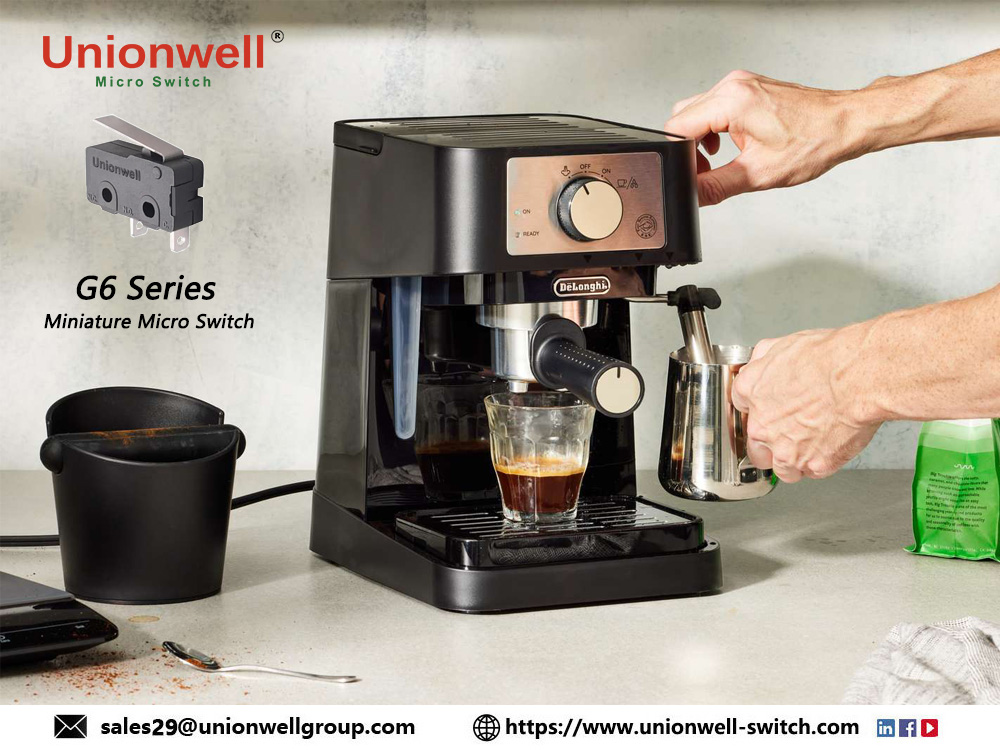
Miniaturization will be a key development direction for snap action micro switches. As more devices integrate PCBs, MCUs, sensors, communication modules, and actuators, internal space becomes increasingly limited, leading to a greater demand for subminiature and miniature micro switches.
However, true miniaturization involves more than just shrinking the form factor; it also requires optimizing the internal structure, such as reducing redundant space, adjusting terminal layout, shortening actuator drive paths, optimizing spring dimensions, and improving contact assembly accuracy.
Balancing Miniaturization and Switching Performance
However, maintaining stable performance at a smaller size is also a crucial consideration for micro switches. With smaller dimensions, the influence between operating force, actuation position, contact reliability, and mechanical life becomes more pronounced, and assembly tolerances can be amplified into malfunctions.
Therefore, manufacturers need to design from the perspective of the overall mechanical tolerance stack-up, rather than focusing solely on form factor. A superior snap-action micro switch should maintain stable operating force, a clearly defined trigger position, reliable contacts, and sufficient mechanical life while achieving miniaturization. This truly tests the precision of design and manufacturing.
Will Sealed Snap Action Micro Switches Become More Important?
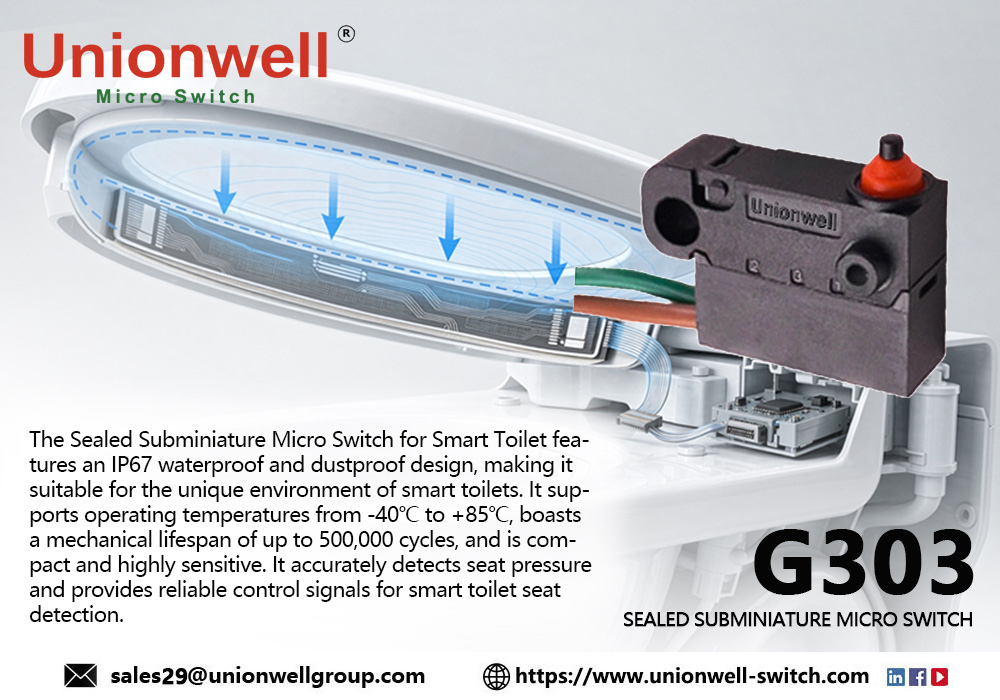
Data from Mordor Intelligence shows that sealed micro switches and waterproof micro switches are projected to grow at a CAGR of 6.9% from 2026 to 2031. As demand from outdoor equipment, renewable energy, and other sectors drives market growth, customers will pay more attention to the long-term operational stability of switches in complex environments.

Snap Action Micro Switch for Harsh Environments
Automotive, outdoor equipment, industrial automation, and renewable energy equipment face increasingly complex operating environments. Automotive interiors may experience temperature variations, vibrations, humidity, and contaminants; outdoor equipment must withstand rain, salt spray, and prolonged temperature cycling; and industrial equipment may be exposed to dust, oil, and cleaning fluids.
In these environments, a sealed micro switch not only helps reduce the ingress of external contaminants but also protects internal contacts and mechanical structures. For position detection applications, stable contact states are directly related to the system's ability to accurately identify mechanical positions; therefore, the sealing design is also closely related to signal reliability.
How Sealing Technology Improves Snap Action Micro Switch Reliability
For micro switch manufacturers, the challenge of sealing design lies in balancing protection with mechanical movement. While the actuator maintains normal motion, the sealing structure must not experience significant wear due to long-term friction and movement. The structural fit between the housing, seal, actuator, and terminal all affect overall performance.
Material selection is equally critical. The sealing material needs to be suitable for the target temperature range and remain stable after long-term compression, friction, and temperature cycling. Therefore, the future competitiveness of sealed micro switches will rely more on real-world verification data such as temperature cycling, damp heat, vibration, lifespan, and protection, rather than a single IP rating.
How Will Automotive Applications Drive Snap Action Micro Switch Development?
Snap Action Micro Switch in Automotive Safety Systems
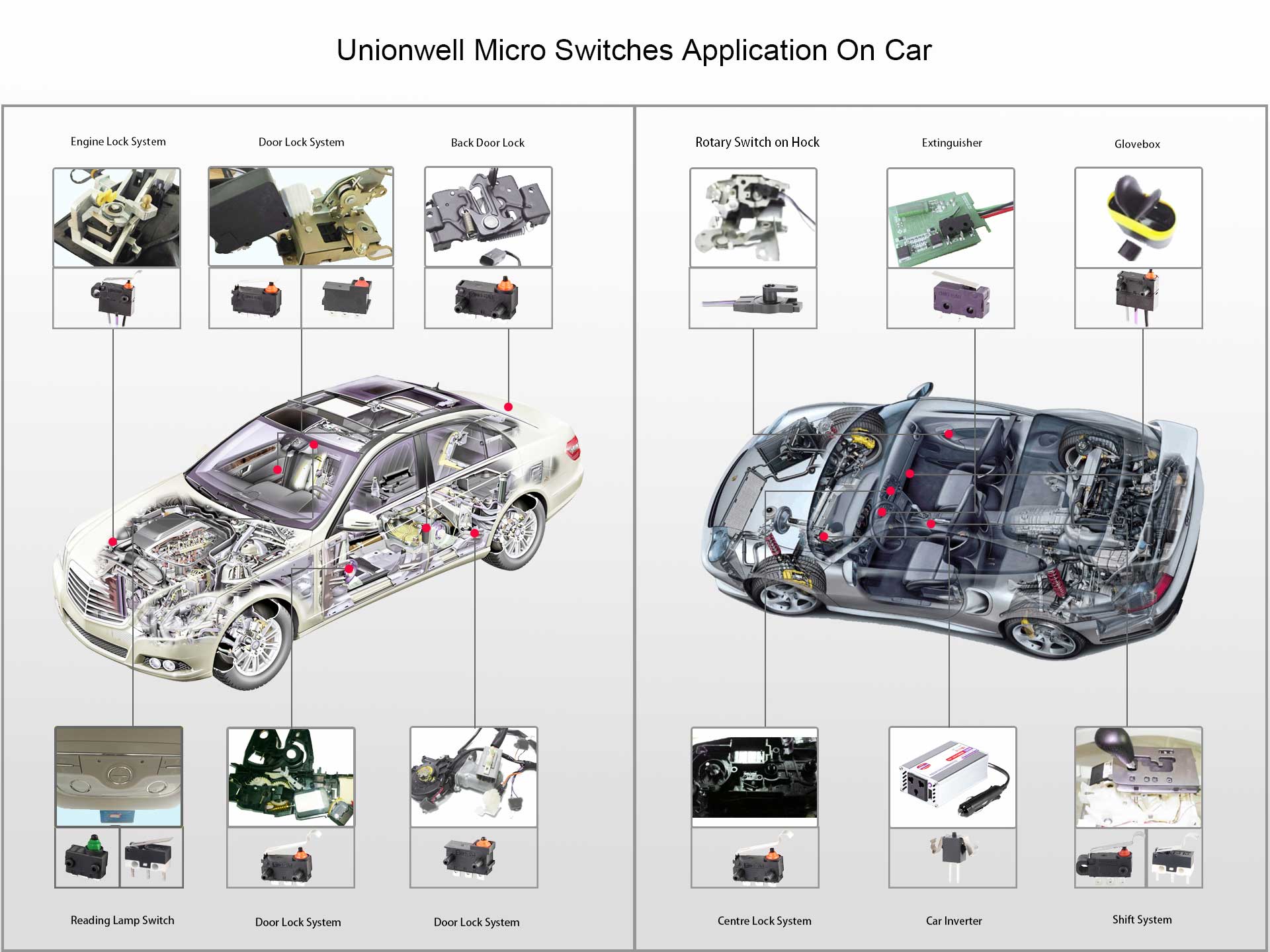
In systems such as Brake Pedal, Seat Belt, Door Lock, and Position Detection, Snap Action Micro Switches are primarily used to confirm a specific mechanical state (e.g., detecting whether a seatbelt buckle, door lock mechanism, or braking mechanism has reached a designated position).
Therefore, automotive applications require precise matching between the switch and the mechanical structure. In addition to Electrical Rating, Operating Force, Overtravel, Actuation Position, Release Position, Vibration Resistance, and Temperature Range must also be considered. Therefore, the automotive industry needs more stable, environmentally resistant, and easily integrated dedicated micro switches.
Snap Action Micro Switch and Sensor Redundancy
The core difference between Snap Action Micro Switches and Hall-effect sensors lies in their detection mechanisms. Hall-effect sensors detect position or state through changes in magnetic fields, without mechanical contacts; Snap Action Micro Switches, on the other hand, rely on mechanical movement to change contact states.
Because their operating principles and potential failure modes differ, they can complement each other in some safety systems, providing independent state feedback paths for the control system. Therefore, future automotive market applications do not necessarily require a choice between mechanical switches and electronic sensors; mechanical contacts can still serve as independent state confirmation functions.
Why Industrial Automation Will Need More Advanced Snap Action Micro Switches?
Snap Action Micro Switch for Industrial Position Detection
In conveyors, robots, production equipment, and safety mechanisms, snap action micro switches can be used to determine whether a mechanical mechanism has reached a specified position, thus confirming whether operation is permitted. Compared to sensors that require continuous position measurement, these applications often only require a clear status signal, making mechanical switches highly valuable.
Roller Lever Snap Action Micro Switch for Automation
Roller lamps are a promising actuator direction for the future. Mordor Intelligence data shows that lamp-actuated designs will account for approximately 41.5% of market demand in 2025, and roller-lever products are projected to grow at a CAGR of 6.7% during the forecast period, with industrial equipment retrofitting being a significant driving factor.
It can more smoothly transmit linear or rotary motion of mechanical components, reduce the impact of direct friction, and improve installation flexibility in confined spaces. In other words, customers may also specify actuator length, roller size, direction of motion, operating force, and installation method. Actuator design will become a crucial differentiator for Micro Switches.
What Is the Future of Snap Action Micro Switch?
Looking at future product development, Snap Action Micro Switches will not develop in just one direction, but will exhibit multi-dimensional upgrades: Miniaturization will continue, Higher Reliability will become the core of product competitiveness, the importance of Sealed Design will continue to increase, Application Specialization will become more pronounced, and Advanced Actuators will also become an important part of product innovation.
Therefore, Snap Action Micro Switches are based on mature mechanical technology, improving the compatibility between the product and modern electronic systems.
Conclusion
The future of Snap Action Micro Switches is not simply about pursuing smaller or cheaper designs, but about developing towards higher reliability, stronger environmental adaptability, greater specialization, and higher system compatibility. For Micro Switch manufacturers, the real need for future improvements lies in miniaturization design capabilities, contact and material technology, sealing structures, actuator customization, automated manufacturing, and long-term reliability verification capabilities.
In the future, a superior Snap Action Micro Switch will not necessarily be the most feature-rich product, but rather one that, under specific application conditions, provides continuous and accurate mechanical status feedback to devices with a suitable structure, stable contact performance, and verifiable long-term reliability. This is the core reason why the Snap Action Micro Switch will continue to maintain its value in the future market.
How Does a Miniature Micro Switch Detect Lid Locking in a Coffee Machine?
How Does a Sealed Micro Switch Work in a Car Charging Port Cover?
Related Article